
How to Load a Dump Trailer: Weight, Balance & Safety
Loading a dump trailer looks simple until you have a ton of gravel piled in the back and the tongue is trying to lift your truck off the ground. Where you place the weight decides whether you get a smooth, stable tow or...
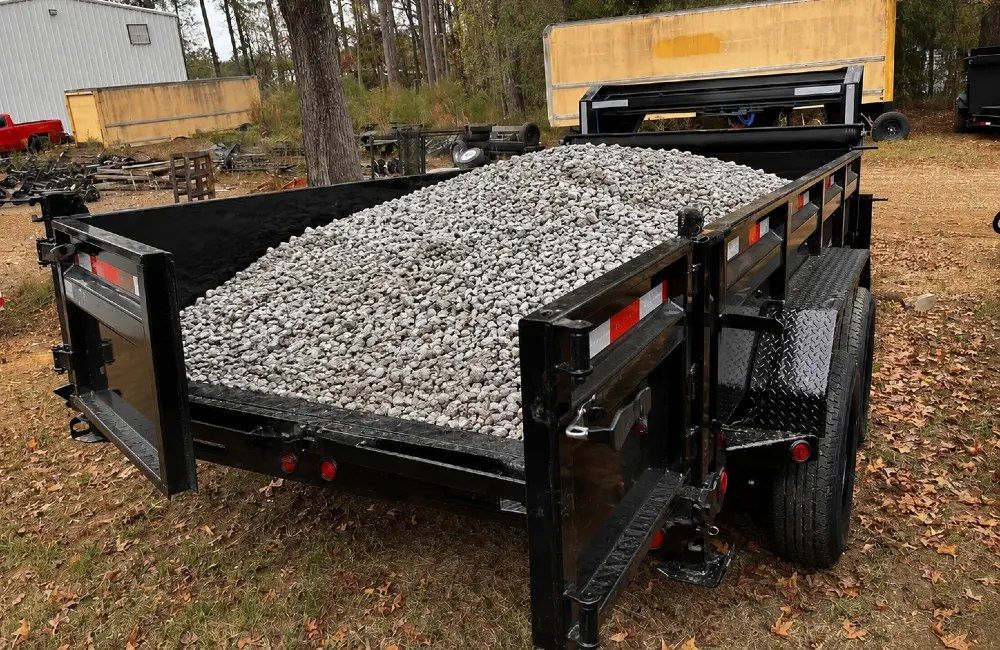
To load a dump trailer safely, place about 60 percent of the weight ahead of the axles and 40 percent behind, aiming for tongue weight around 10 to 15 percent of the total load. Start heavy material at the front wall and work back, keep the load level side to side, stay under the trailer GVWR and your tow vehicle rating, and tarp loose material or use four-point tie-downs for equipment.
Loading a dump trailer looks simple until you have a ton of gravel piled in the back and the tongue is trying to lift your truck off the ground. Where you place the weight decides whether you get a smooth, stable tow or a white-knuckle ride with the trailer swaying behind you. This guide walks you through how to load a dump trailer the right way: how to distribute the weight, how to stay under your ratings, and how to secure the load so nothing shifts on the road.
Load Front-Heavy: The 60/40 Rule
The single most important rule for loading any towable trailer is weight distribution, and a loaded dump trailer is no exception. You want roughly 60 percent of the cargo weight ahead of the axles and 40 percent behind. That keeps positive downward pressure on the hitch (your tongue weight) so the trailer tracks straight instead of fishtailing.
With loose material like dirt, gravel, or mulch, that means shoveling or dumping toward the front wall first, then working back. If a skid steer or mini-ex is loading you, have the operator start each bucket at the nose and build backward. Never dump the whole load in the middle or the tail, which is how trailers start swaying at highway speed.
- Target tongue weight: about 10 to 15 percent of the total loaded trailer weight.
- Too little tongue weight: the trailer sways and wanders. Shift weight forward.
- Too much tongue weight: the truck squats and steers light in front. Shift weight back.
Know Your Weight Limits Before You Load
A dump trailer will happily hold more material than it is legally or safely rated to carry. Dense loads like wet dirt, gravel, sand, and concrete add up fast, and it is easy to overload a small trailer with just a few buckets. Check these numbers before the first shovel goes in.
- GVWR: the max total loaded weight of the trailer. Empty trailer weight plus your cargo must stay under this.
- Payload capacity: GVWR minus the empty trailer weight. That is the actual material you can haul.
- Tow vehicle rating: your truck must be rated to pull the fully loaded trailer with the correct hitch class.
- Material weight: gravel runs about 2,800 lb per cubic yard and wet dirt even more, so a half-full 7x14 can hit its limit fast.
When in doubt, take less per trip. Two safe loads beat one overloaded one that blows a tire or gets you a ticket at the scale. If you are towing across state lines, check the towing rules where you are headed with our state-by-state towing law guides.
Step-by-Step: How to Load a Dump Trailer
Here is the loading sequence from hitch-up to road-ready:
- Hitch up and level first. Couple the trailer to the truck, connect the safety chains and breakaway cable, and confirm the trailer sits roughly level before loading. A level trailer loads and tows better.
- Chock and stabilize. On uneven ground, chock the wheels so the trailer cannot roll while you load.
- Start at the front. Place or dump the first, heaviest material against the front wall to build your 60/40 balance.
- Spread it even side to side. Keep the load level across the width so one wheel is not carrying more than the other.
- Do not overfill the walls. Keep loose material below the top of the side walls so nothing spills on the road.
- Check your tongue weight. The truck should squat slightly at the rear, not lift at the front. Adjust the load if it feels wrong.
Securing the Load So Nothing Shifts
Loose material and loaded equipment need different securing, but both matter. For dirt, gravel, and demo debris, a mesh tarp keeps material from blowing out and is required in many areas. For anything with wheels or tracks, tie down at four points and rate your straps or chains for the load.
- Loose material: cover with a tarp, keep the pile below the walls, and never haul an uncovered load of gravel or debris.
- Equipment or a machine: use four-point tie-downs with straps or chains rated above the item weight, and re-check them after the first few miles.
- Mixed loads: secure the heavy item first for balance, then fill loose material around it toward the front.
Want a printable version for the job site or to leave in the trailer? Download our free printable dump trailer load sheet and keep it handy.
Common Dump Trailer Loading Mistakes
Most towing scares trace back to a handful of avoidable loading errors:
- Dumping the whole load in the middle or the rear, which kills tongue weight and causes sway.
- Overloading a small trailer with dense material like wet dirt or concrete.
- Loading heavy on one side, which overloads a tire and pulls the trailer.
- Skipping the tarp on loose gravel or debris.
- Forgetting to re-check straps and tongue weight after the load settles.
Get the balance right and a dump trailer is one of the easiest tools to tow. When you need one, you can find a dump trailer to rent near you on BigLoads and deal directly with a local owner. New to the whole thing? Start with our complete guide to loading a trailer safely, or read the dump trailer rental cost and size guide before you book.
Need one to load? Browse dump trailer rentals near you.
Related on BigLoads: dump trailer rentals near you · tie-downs & ratchet straps in The Workshop · trailer payload calculator.
Frequently Asked Questions
How do you distribute weight in a dump trailer?
What happens if you load a dump trailer too far back?
How much weight can a dump trailer hold?
Do you need to tarp a dump trailer load?
How do you load equipment into a dump trailer?
Ready to haul?
Find the right trailer near you — or list yours and start earning.