
How to Load a Utility Trailer: Balance, Ramps & Tie-Downs
A utility trailer is the workhorse of the trailer world: open deck, low sides, a drop-down ramp gate, and enough room for mowers, ATVs, furniture, appliances, mulch, or a dump run. But an open trailer gives you nothing...
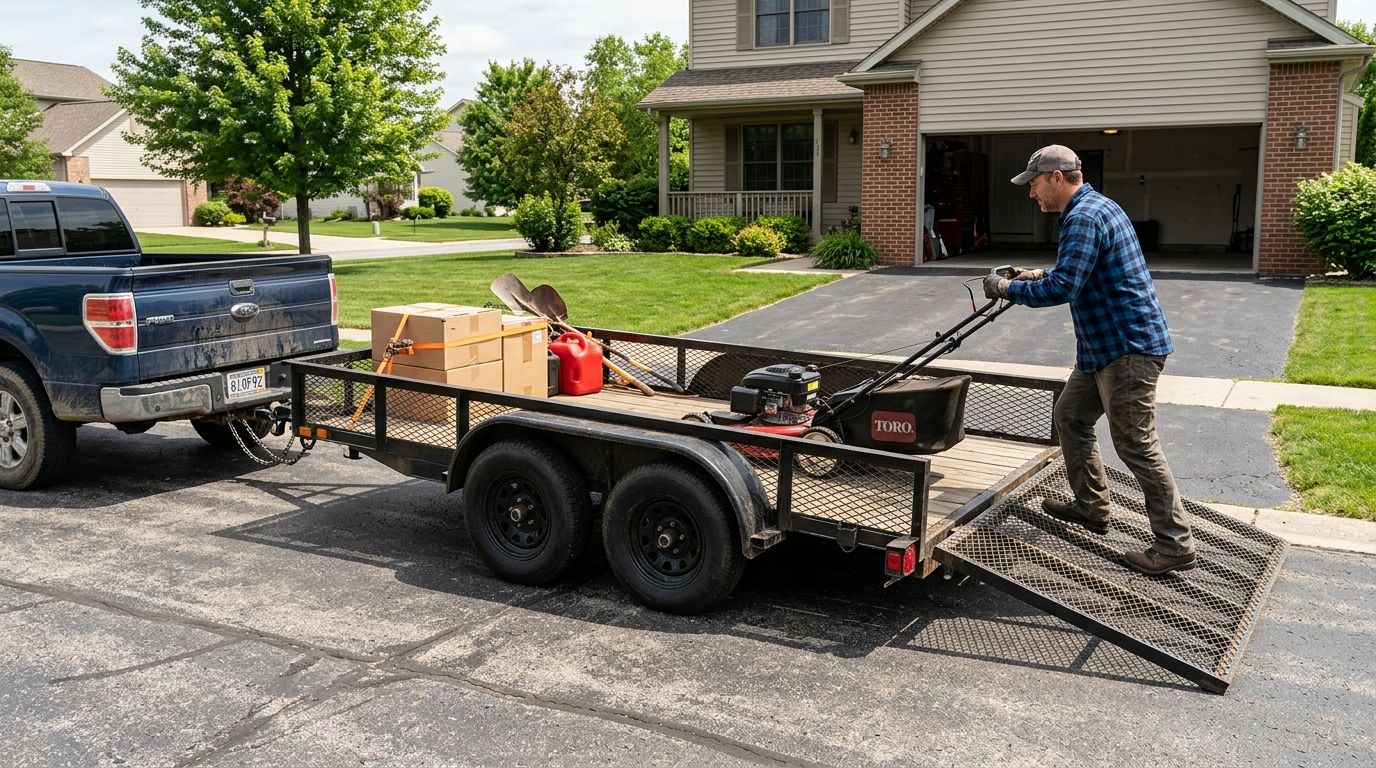
To load a utility trailer safely, put about 60 percent of the weight ahead of the axles and 40 percent behind for proper tongue weight. Roll or drive heavy items up the rear ramp gate first and position them over the front half of the deck, keep the load balanced side to side, secure everything with rated straps to the trailer tie-down points, and stay under the trailer GVWR and your tow vehicle rating.
A utility trailer is the workhorse of the trailer world: open deck, low sides, a drop-down ramp gate, and enough room for mowers, ATVs, furniture, appliances, mulch, or a dump run. But an open trailer gives you nothing to lean the load against, so how you place and secure your cargo is everything. Here is how to load a utility trailer so it tows straight and nothing slides, tips, or flies off.
Balance the Load: 60/40 Front to Back
Like any towable trailer, a utility trailer needs most of its weight ahead of the axles. Aim for roughly 60 percent of the cargo weight in the front half of the deck and 40 percent behind, which gives you about 10 to 15 percent tongue weight. Too much weight in the rear removes tongue weight and the trailer starts to sway.
- Heaviest item first: place your heaviest piece just ahead of the axles, centered left to right.
- Fill forward: work lighter items toward the front and sides around the heavy piece.
- Watch the tongue: the truck should squat slightly at the rear. If the front end lifts, shift weight back a little.
Using the Ramp Gate the Right Way
Most utility trailers have a fold-down ramp gate. Use it, do not fight it. Lower it fully onto solid ground, walk mowers and hand trucks straight up the center, and never load at an angle where a wheel can drop off the edge.
- Lower the ramp fully. Make sure it sits flat and stable before rolling anything up.
- Go slow and straight. Walk riding mowers and ATVs up in low gear; keep hand trucks square to the ramp.
- Set the parking brake. On any self-powered equipment, engage the brake and kill the engine once positioned.
- Raise and latch the gate. Confirm the gate is fully latched before you tie down.
Securing the Load on an Open Deck
An open trailer has no walls to hold cargo in, so tie-downs do all the work. Use ratchet straps or rated tie-downs anchored to the trailer stake pockets or D-rings, not to random rail spots that can bend.
- Wheeled equipment: four-point tie-down, straps rated above the item weight, front and rear.
- Furniture and boxes: strap in tight bundles and cover with a tarp so nothing catches the wind.
- Loose material: bag it or tarp it; never haul loose debris uncovered.
- Re-check early: pull over after the first few miles and re-tension every strap.
Want it on paper for the job? Download our free printable utility trailer load sheet and keep it in the truck.
Know Your Weight Limits
Utility trailers are easy to overload because they look like they can take anything. Check the GVWR on the trailer plate, subtract the empty weight to get your real payload, and make sure your tow vehicle is rated for the loaded trailer. A single riding mower plus a deck of firewood can sneak up on a light-duty trailer fast.
When you need one, you can find a utility trailer to rent near you on BigLoads and deal directly with a local owner. New to towing? Start with our guide to loading a trailer safely, and if you are still choosing a trailer, read the utility trailer rental guide first.
Common Utility Trailer Loading Mistakes
Avoid the errors that cause most open-trailer trouble:
- Loading heavy at the back, which kills tongue weight and causes sway.
- Under-strapping cargo because the deck feels roomy.
- Loading equipment at an angle and dropping a wheel off the ramp.
- Overloading a light-duty trailer with dense material.
- Forgetting to re-check straps after the load settles.
Related on BigLoads: tie-downs & ratchet straps in The Workshop · loading ramps in The Workshop.
Frequently Asked Questions
How do you distribute weight on a utility trailer?
How do you tie down a load on an open utility trailer?
How do you load a riding mower onto a utility trailer?
How much weight can a utility trailer carry?
Do you have to tarp a utility trailer load?
Ready to haul?
Find the right trailer near you — or list yours and start earning.