
How to Load an Equipment Trailer: Ramps, Balance & Chains
Loading a skid steer, tractor, or mini excavator onto an equipment trailer is where trailering gets serious. You are driving a heavy machine up steel ramps onto a deck, and a mistake here can flip a machine or wreck a...
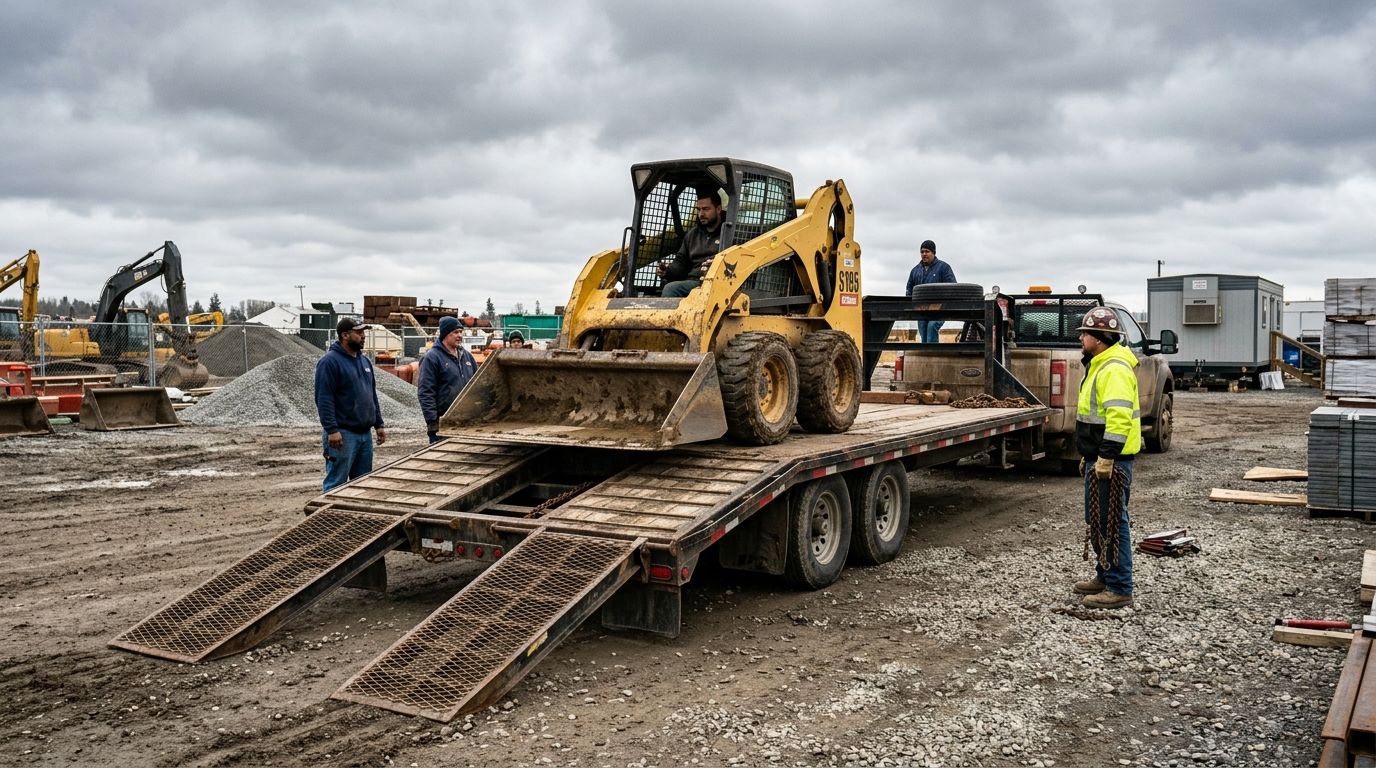
To load an equipment trailer safely, drive the machine slowly and straight up fully seated ramps, position it so its heaviest end sits just ahead of the axles for proper tongue weight, and center it side to side. Then chain it down at four points with binders rated above the machine weight, secure any attachments separately, and stay under the trailer GVWR and your tow vehicle rating.
Loading a skid steer, tractor, or mini excavator onto an equipment trailer is where trailering gets serious. You are driving a heavy machine up steel ramps onto a deck, and a mistake here can flip a machine or wreck a load balance. Done right, it is routine. Here is how to load an equipment trailer safely, from ramp setup to the last chain binder.
Set Up the Ramps and Ground First
Before anything rolls, park on firm, level ground, chock the trailer wheels, and lower the ramps so they sit fully seated with no gap or wobble. Bent or partially seated ramps are how machines slip off the side.
- Firm, level ground: avoid soft dirt or a slope that changes the ramp angle.
- Chock the wheels: keep the trailer from rolling while you drive the machine up.
- Ramps fully seated: both ramps flat and solid, spaced to the machine track or tire width.
- Spotter if you can: a second set of eyes prevents a wheel drifting off the ramp edge.
Drive On Slow and Position Over the Axles
Drive the machine up the ramps slowly, straight, and in low gear. Heavy end first is usually best for a skid steer (bucket end forward is often recommended by the manufacturer, so check the manual). Position the machine so its center of gravity sits just ahead of the trailer axles for the right tongue weight.
- Go slow, stay straight. Creep up the ramps in low gear; do not gun it.
- Heavy end per the manual. Follow the machine maker on which direction to load; for many skid steers that is bucket forward.
- Center over the axles. Position the machine so most of its weight is slightly ahead of the axles for proper tongue weight.
- Lower attachments. Drop the bucket or blade to the deck, set the parking brake, and shut it down.
Chain It Down at Four Points
Straps are fine for light equipment, but a heavy machine needs chains and binders rated above its weight. Secure at four independent points pulling in opposing directions so the machine cannot walk forward, back, or sideways under braking and cornering.
- Four-point minimum: chain each corner to the trailer D-rings or stake pockets at opposing angles.
- Rate the hardware: chains and binders must be rated above the machine weight; check the working load limit.
- Secure attachments: buckets, blades, and loose gear get their own tie-downs.
- Re-check early: stop after the first few miles and re-tension; chains settle as the machine seats.
Want the steps on paper? Download our free printable equipment trailer load sheet for the job site.
Know Your Weight Limits
Equipment is heavy and dense, so it is easy to exceed a trailer rating with a single machine. Check the trailer GVWR and axle ratings, weigh or look up your machine weight plus any attachments, and confirm your tow vehicle and hitch are rated for the loaded trailer. If you are crossing state lines, check the towing rules where you are headed.
When you need the right trailer, you can find an equipment trailer to rent near you on BigLoads. New to heavy hauling? Read our guide to loading a trailer safely first, or see the equipment trailer rental guide.
Common Equipment Loading Mistakes
The errors that cause most equipment-hauling accidents:
- Loading on soft or sloped ground so the ramps shift.
- Driving up too fast or at an angle and slipping a track off the ramp.
- Positioning the machine too far back, killing tongue weight.
- Using straps or hardware rated below the machine weight.
- Leaving the bucket or attachments unsecured.
Related on BigLoads: tie-downs & ratchet straps in The Workshop · loading ramps in The Workshop · trailer payload calculator.
Frequently Asked Questions
How do you load a skid steer onto an equipment trailer?
How do you tie down heavy equipment on a trailer?
Where should equipment sit on the trailer?
Do you need chains or straps to secure equipment?
How much can an equipment trailer haul?
Ready to haul?
Find the right trailer near you — or list yours and start earning.