
Trailer Rental Cost Guide: Prices by Type (2026)
Renting a trailer is one of the smartest moves you can make for a one-time haul. You get the right equipment for the job, you skip the purchase price, and you hand back the keys when the work is done. But how much does...
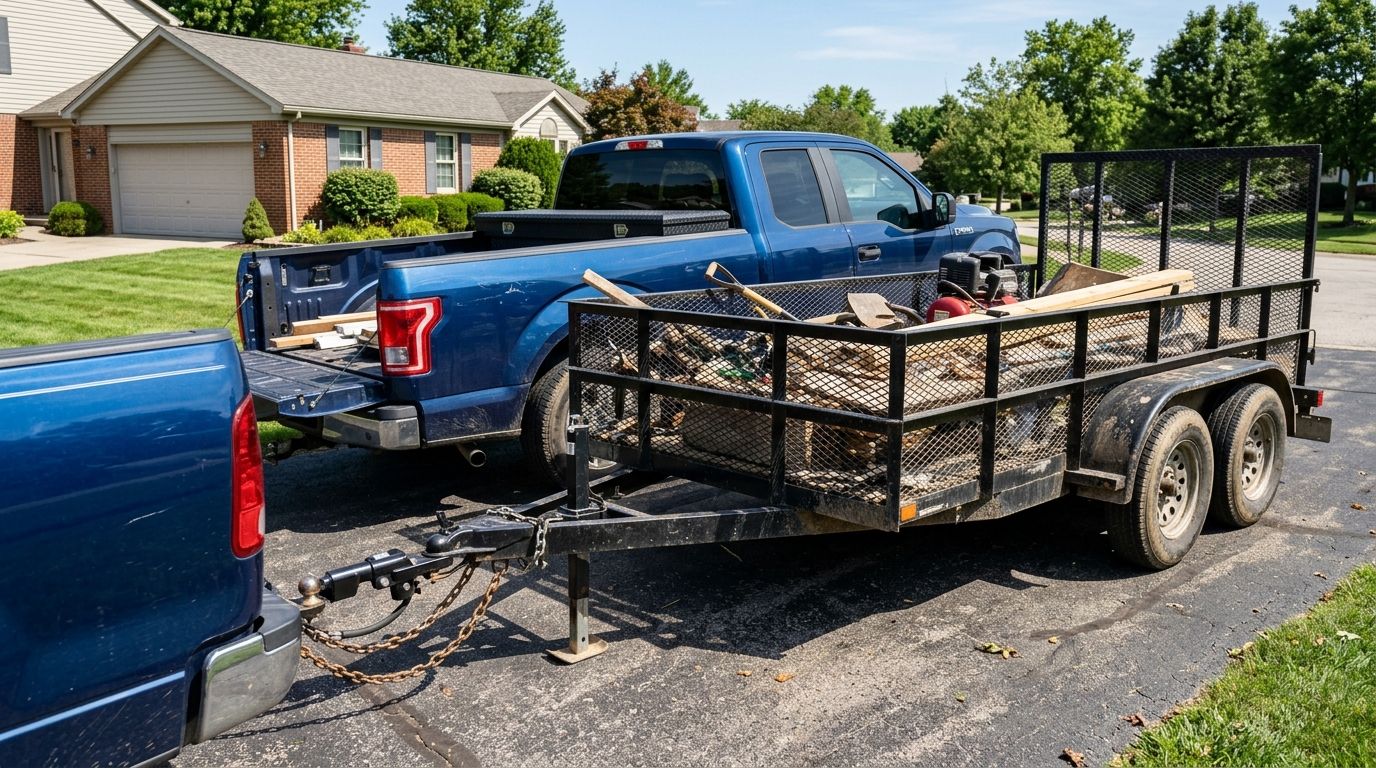
Trailer rental costs vary by type. On peer-to-peer marketplaces, typical daily rates run $50–$100 for a utility trailer, $100–$140 for a car hauler, $125–$195 for a dump trailer, and $150–$230 for a gooseneck. Price is driven by trailer size, your location, rental duration, and whether you rent from a local owner or a national chain. Multi-day and weekend rates are usually discounted.
Renting a trailer is one of the smartest moves you can make for a one-time haul. You get the right equipment for the job, you skip the purchase price, and you hand back the keys when the work is done. But how much does it cost to rent a trailer? The short answer: it depends on the type. A small utility trailer might run $50 a day from a local owner; a gooseneck can push $230. This guide breaks down real day-rate ranges for every common trailer type, explains what drives the price up or down, and shows you how to find the best deal near you.
Trailer Rental Prices by Type (2026 Day Rates)
The table below shows peer-to-peer owner rates on BigLoads based on live priced listings. These are the real numbers people are paying, not inflated rack rates from a national chain.
- Utility trailer: $50–$100/day — the workhorse for yard cleanup, furniture moves, and light hauling.
- ATV / snowmobile trailer: $75–$120/day — purpose-built for recreational vehicles.
- Cargo / enclosed trailer: $90–$175/day — weatherproof, lockable; great for household moves and gear transport.
- Car hauler trailer: $100–$140/day — drives up ramps onto the deck; ideal for project cars, classic vehicles, and auction pickups.
- Equipment trailer: $80–$150/day — heavy-duty decks rated for skid steers, mini excavators, and other powered equipment.
- Flatbed trailer: $120–$200/day — open deck for lumber, machinery, and oversized loads.
- Dump trailer: $125–$195/day — hydraulic lift dumps the load; best for dirt, gravel, debris, and demo material.
- Gooseneck trailer: $150–$230/day — fifth-wheel hitch, higher capacity; needed for heavy or long loads.
These are peer-to-peer rates from local owners. National chains like U-Haul or Home Depot rent a narrow selection (mostly utility and cargo) at higher rates. For everything else, a marketplace like BigLoads connects you directly with a local owner — no commission, no markup.
What Drives Trailer Rental Prices Up or Down
Trailer rental prices are not fixed. Several factors move the number:
- Trailer type and size: A tandem-axle gooseneck with a 25,000 lb GVWR costs more than a single-axle utility trailer. More capacity and complexity = higher rate.
- Duration: Most owners charge a daily rate but discount multi-day rentals. If your job takes two or three days, ask about a weekend or weekly flat rate — you can often cut 20–30% off the per-day price.
- Location: Rates in dense metro areas tend to run 10–20% higher than rural markets because demand is higher and supply is tighter.
- Season: Spring through early fall is peak moving and landscaping season. Rates tighten and availability shrinks. Booking mid-week or in winter often gets you a better deal.
- Peer-to-peer vs. national chain: National rental chains charge corporate overhead and franchise fees on top of the base rate. A local owner renting through BigLoads has none of that. The same size trailer often runs $20–40/day cheaper from an owner.
- Condition and features: A newer trailer with ramps, tie-down rings, an electric brake controller, and a spare tire justifies a higher rate. An older single-axle utility trailer does not.
Daily, Weekend, and Weekly Rates Explained
Most trailer rentals are priced as a daily rate, but the rental period rarely means 24 hours on the dot. Here is how it typically works:
- Daily rate: One calendar day, usually pickup and return within business hours. Best for a single-day job like a dump run or furniture move.
- Weekend rate: Friday pickup through Monday morning return, often priced at 2 days instead of 3. Best for projects that need Saturday and Sunday without the full per-day hit.
- Weekly rate: 5–7 days, often discounted to 4–5 day-equivalents. If your landscaping job or renovation will take all week, negotiate this upfront.
Deposits vary by owner. Many peer-to-peer owners require a cash or card deposit against damage, typically $100–$300 depending on the trailer value. National chains usually put a hold on your card. Ask about the deposit policy before you book so there are no surprises at pickup.
How to Find the Best Trailer Rental Near You
The fastest way to find a trailer that fits your job and your budget:
- Know your load. Weight and dimensions matter. Identify how heavy your load is and whether you need an open deck, enclosed box, dump bed, or car-hauling ramps.
- Check your tow vehicle. Every trailer has a GVWR. Every tow vehicle has a rated towing capacity. Do not assume a half-ton pickup can pull a 14,000 lb gooseneck — check the sticker on the door jamb.
- Search your area. Browse local listings and filter by type, availability, and date.
- Compare rates. Look at the daily rate, any listed extras (insurance, mileage caps), and the deposit requirement.
- Book directly with the owner. Message them, confirm your dates and pickup plan, and ask about load restrictions. Clear communication upfront avoids every problem.
Searching in Texas or another state with a lot of trailer inventory? Check the Texas trailer rental hub for local listings. We also have hubs for every other state if you want to compare inventory in a specific area.
Looking for a specific type? Our utility trailer rental guide and dump trailer rental guide go deep on each type — sizing, load limits, towing requirements, and what to ask the owner before you book.
Peer-to-Peer Trailer Rental vs. National Chains
National chains — U-Haul, Home Depot, Menards, and equipment rental companies — are fine for basic cargo trailers and utility trailers. But their selection is limited and their pricing does not flex. They also charge for every add-on and frequently have limited Saturday-morning availability when everyone else needs a trailer.
Peer-to-peer rental through a marketplace like BigLoads works differently:
- $0 commission on the rental — you pay the owner directly
- Access to trailer types national chains never stock (dump, gooseneck, car hauler, equipment)
- Direct communication with the owner — you can negotiate multi-day rates and flexible pickup times
- Owners who know their trailers and can answer your specific questions
- Often better pricing, especially outside of major metro areas
If you need a trailer that a rental chain does not carry — or if you want a better rate on one they do — search BigLoads for trailers near you and deal directly with a local owner.
Frequently Asked Questions
How much does it cost to rent a trailer per day?
What is the cheapest type of trailer to rent?
Do I need a special hitch or license to rent a trailer?
What is a typical trailer rental deposit?
Is it cheaper to rent a trailer from an owner or a national chain?
Ready to haul?
Find the right trailer near you — or list yours and start earning.