
Best Trailer Rental Insurance in 2026: State-by-State Guide
If you rent out trailers, insurance is the part of the business nobody warns you about until something goes wrong. A renter jackknifes on the highway, a dump trailer bends a gate on a jobsite, or a customer disappears...
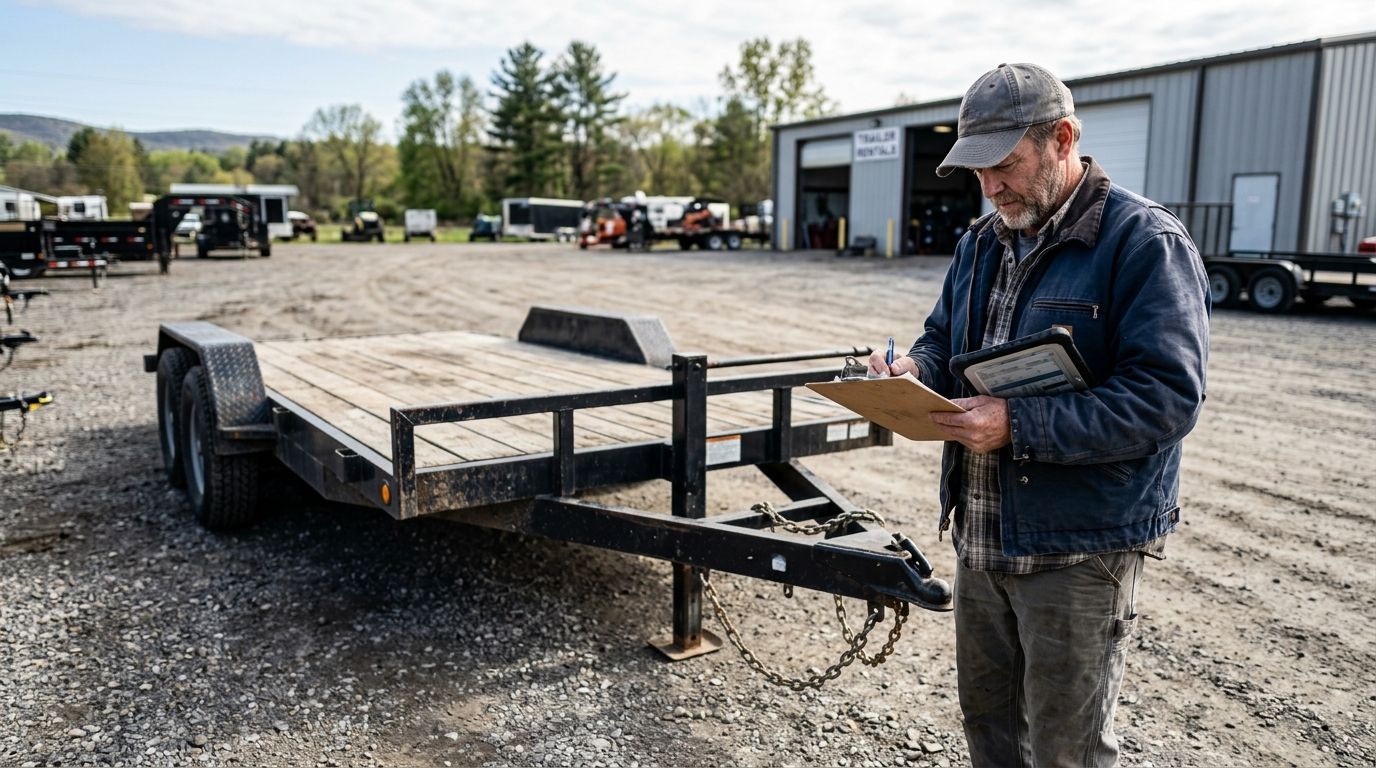
Most trailer rental owners carry two things: general liability (GL) coverage for injuries or property damage tied to their rental business, and inland marine or physical-damage coverage on the trailers themselves. In 2026, premiums have climbed sharply and a few states have become hard to insure, so shop early, compare GL and physical-damage limits separately, and confirm your policy actually covers rental use before you list.
If you rent out trailers, insurance is the part of the business nobody warns you about until something goes wrong. A renter jackknifes on the highway, a dump trailer bends a gate on a jobsite, or a customer disappears with your equipment. Without the right coverage, one bad rental can wipe out a year of income. This guide breaks down how trailer rental insurance actually works in 2026, what it costs, which states are getting harder to insure, and the exact questions to ask before you sign a policy.
This is educational information for trailer owners, not legal or financial advice. Coverage, prices, and availability change fast and vary by state, so confirm everything with a licensed insurance agent before you make a decision.
The Two Types of Coverage Every Rental Owner Needs
Trailer rental insurance isn't one product. Owners running a rental business generally stack two separate coverages, and mixing them up is where a lot of people get burned.
General Liability (GL)
General liability covers claims from other people, meaning bodily injury or property damage that your rental business is tied to. If a renter's load shifts and damages a third party's property, or someone is hurt in connection with your trailer, GL is the layer that responds. Rental businesses commonly carry limits like $1,000,000 per occurrence and $2,000,000 aggregate. General liability protects other people and your business from lawsuits; it does not pay to fix your own trailer.
Physical Damage / Inland Marine
This is the coverage for your actual trailers: theft, collision, vandalism, or damage while they're out on rental. In the rental world it's often written as inland marine, a commercial policy built for movable business property, rather than a standard auto or homeowner endorsement. If a renter returns your dump trailer with a caved-in gate, or it's stolen off a jobsite, this is what pays to repair or replace it.
A key trap: a personal auto policy or homeowner's policy usually will not cover a trailer that you rent out for money. The moment there's a commercial rental transaction, most personal policies exclude the claim. Owners who assume their truck policy covers the trailer often find out the hard way that it doesn't apply to rental use.
What Trailer Rental Insurance Costs in 2026
Prices vary widely by state, trailer type, number of units, and your claims history, so treat these as illustrative ranges rather than quotes. Here's what owners are reporting in 2026:
- Single high-value trailer, high liability limits: owners with one dump trailer carrying $1M/$2M general liability have reported annual premiums in the low-thousands range, in some cases around $4,000/year. Heavy, high-payout equipment on high limits sits at the expensive end.
- Small fleet, blended GL + physical damage: one commonly cited example was roughly $2,900/year for general liability plus about $1,000/year for inland marine covering five trailers. Spreading fixed costs across multiple units usually brings the per-trailer price down.
- Utility and enclosed trailers: lighter, lower-value trailers are cheaper to insure than dump or gooseneck units because the replacement cost and payout risk are lower.
Two things move your premium more than anything else: the liability limit you choose and the replacement value of the trailers. Going from $1M to $2M in liability, or insuring a $15,000 dump trailer versus a $3,000 utility trailer, changes the math substantially.
Why Rates Jumped in 2026 (and Why Some States Went Hard)
If your renewal came in higher than last year, you're not imagining it. Across owner communities in 2026, one theme keeps coming up: a major program many rental owners relied on changed its underlying carrier, and renewal premiums in some markets roughly doubled. Owners in states like Ohio described policies that used to cover three trailers now costing about the same for one.
At the same time, a handful of states have become genuinely difficult to place coverage in. Owners have reported that certain programs stopped writing new rental policies in states such as Georgia and New York, with tougher conditions in places like Florida, California, and Indiana. This is a moving target, and a state that is hard to insure this quarter may loosen next quarter, but the practical takeaway is the same: start shopping well before your renewal date, because finding a new carrier in a hard state can take weeks.
The good news is that owners are still finding coverage. When one program tightens, independent commercial agents who specialize in trailer and equipment rental often have access to other markets. If your current provider non-renews or spikes your rate, that's a signal to get a second and third quote, not to go uninsured.
How to Find the Right Policy
You have a few realistic paths to coverage as a rental owner:
- Independent commercial insurance agents and brokers. These agents shop multiple carriers for you and are usually the best fit for rental businesses, especially in hard-to-insure states. Look specifically for ones who understand trailer or equipment rental, because a general small-business agent may not know how to write inland marine on rental units.
- Specialty rental programs. Some programs are built specifically for trailer rental fleets and bundle GL and physical damage together. These can be convenient, but confirm they're actively writing in your state before you count on them.
- Major carriers with commercial lines. Large national insurers write commercial trailer and business policies. Some also handle subrogation well, meaning if a renter is at fault, the insurer pursues that party to recover the loss, which can protect your deductible and record.
Whatever route you take, get more than one quote. Premiums for the same trailer and limits can vary by thousands of dollars between carriers, and in 2026 that spread is wider than usual.
Questions to Ask Before You Buy
Bring this list to any agent. The answers separate a policy that actually protects you from one that leaves a gap:
- Does this policy explicitly cover trailers that I rent out to third parties for money? Rental use is the make-or-break exclusion.
- What are my general liability limits, per occurrence and aggregate, and are they enough for my highest-risk trailer?
- Is physical damage on the trailers included, or do I need separate inland marine coverage?
- What's the deductible on a physical-damage or theft claim, and does it apply per trailer or per incident?
- If a renter is at fault, does the carrier subrogate (go after the renter) to recover my loss and protect my record?
- Are you actively writing new policies in my state right now, and how long does binding take?
- Does coverage follow the trailer across state lines, and are there any territory limits, for example trips near or across the border?
Insurance Is Only Half the Protection
A policy pays out after something goes wrong. Smart owners also reduce the odds of a claim, and make claims easier to win, with a few habits that show up again and again among experienced renters:
- Photograph every trailer before and after each rental. Timestamped photos of the trailer's condition are the single best tool for proving damage was caused during a rental. No photos often means no recovery.
- Use a written rental agreement. A clear contract that spells out the renter's responsibility for damage, GVWR limits, and that the trailer left your lot in working order gives both your insurer and a small-claims court something to work with.
- Keep a card on file and verify the tow vehicle. A renter towing a 14,000 lb dump trailer with an undersized truck is a claim waiting to happen. A quick check protects your equipment and your premium.
- Consider GPS tracking on higher-value units. It deters theft and helps recover a trailer that doesn't come back, which also strengthens any claim or police report.
For a deeper walkthrough of coverage types beyond the rental-business angle, see our complete guide to trailer insurance. And if you're just getting started renting out equipment, our dump trailer rental guide covers pricing and demand.
List Your Trailer With Confidence
Once you've got the right coverage in place, the next step is putting your trailers to work. The whole reason to carry insurance is so an idle trailer can earn without keeping you up at night, and that only pays off when your equipment is actually booked.
BigLoads connects trailer owners directly with local renters. There's no middleman taking a cut of your rental, renters contact you directly, and you set your own rates, availability, and rules. Listing is free, so your trailer can start earning while it would otherwise sit in the yard.
A few things make listings book faster: clear photos from multiple angles, an honest description with the GVWR and what the trailer can haul, a fair daily rate compared to nearby owners, and quick replies to inquiries. Owners who treat it like a real side business, with a simple rental agreement and before-and-after photos, tend to see repeat renters and fewer headaches.
Ready to get started? You can list your trailer for free, or browse trailers for rent near you to see what owners in your area are charging. Protect the asset first, then let it pay for itself.
Ready to line up coverage? See our owner guide to trailer rental insurance for a plain-English breakdown of the coverage you actually need, plus a way to get a quote built specifically for trailer rental businesses in all 50 states.
Related on BigLoads: trailer rental business insurance cost · list your trailer on BigLoads.
Frequently Asked Questions
Do I need insurance to rent out my trailer?
How much does trailer rental insurance cost in 2026?
What's the difference between general liability and inland marine coverage?
Why did my trailer insurance rate go up in 2026?
Which states are hardest to insure a trailer rental business in?
Ready to haul?
Find the right trailer near you — or list yours and start earning.