
How to Load a Gooseneck Trailer: Balance, Ramps & Chains
Gooseneck and deckover trailers are built to haul heavy: tractors, skid steers, big equipment, and long loads. Because the hitch sits in the truck bed instead of behind the bumper, they tow more stable than a...
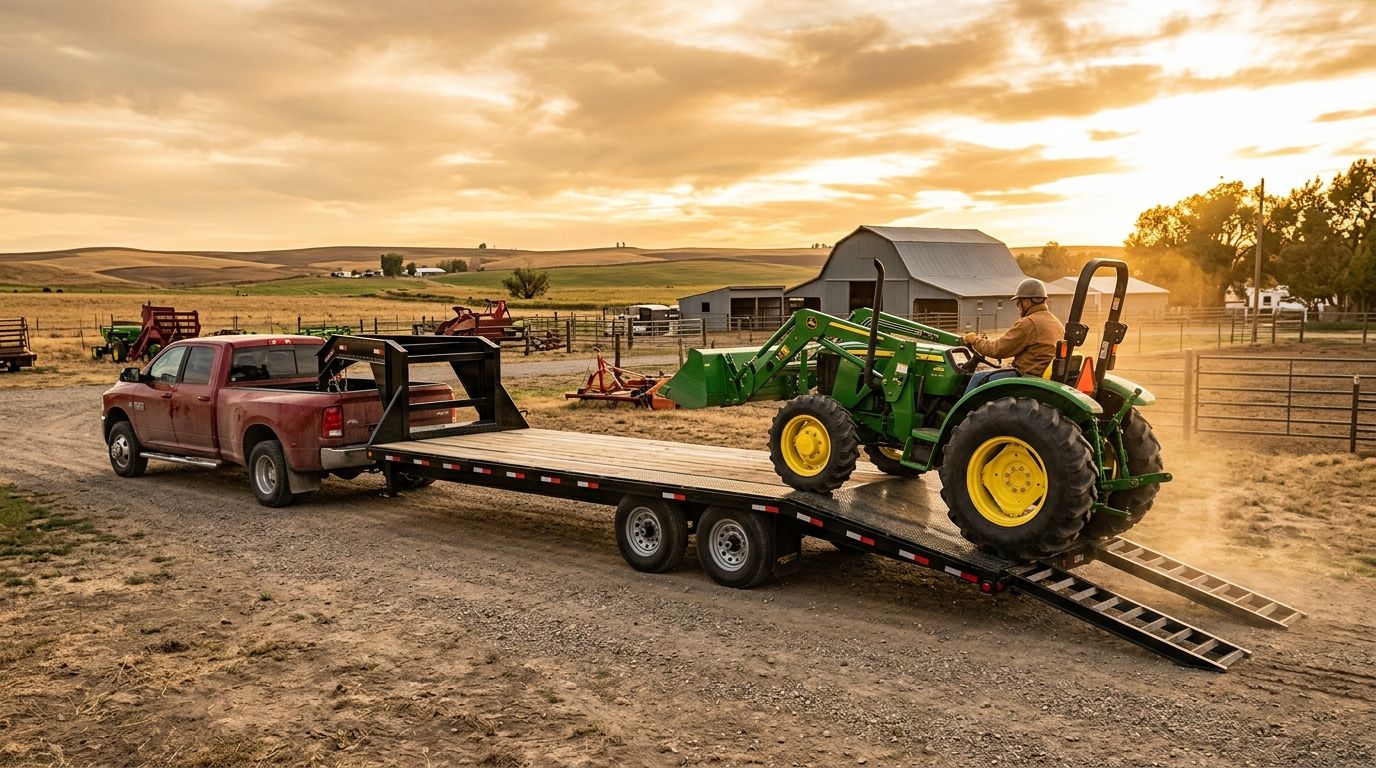
To load a gooseneck or deckover trailer safely, place the load so its weight sits over and slightly ahead of the trailer axles, which puts the right amount of weight on the gooseneck hitch in the truck bed. Drive machines up seated ramps slowly and straight, center the load side to side, chain heavy items down at four points, and stay under the trailer GVWR and your tow vehicle rating.
Gooseneck and deckover trailers are built to haul heavy: tractors, skid steers, big equipment, and long loads. Because the hitch sits in the truck bed instead of behind the bumper, they tow more stable than a bumper-pull and carry more weight, but the loading math is a little different. Get the load over the axles right and a gooseneck is one of the most stable trailers on the road. Here is how to load one safely.
Gooseneck Balance: Weight Over the Axles
On a bumper-pull you chase tongue weight at the coupler. On a gooseneck, the pivot is the hitch in the bed, so you want the load centered over and slightly ahead of the trailer axles. That transfers the right amount of weight forward onto the bed hitch, which is why goosenecks resist sway so well. Aim for the heaviest part of the load just forward of the axles, centered left to right.
- Over and slightly ahead: position the heavy load just forward of the trailer axles.
- Center it: keep the load balanced side to side so one wheel set is not overloaded.
- Bed hitch weight: a properly loaded gooseneck puts roughly 15 to 25 percent of the load weight on the bed hitch.
Driving Machines Up the Ramps
Most gooseneck and deckover trailers load heavy equipment via fold-down rear ramps. The deckover design sits above the wheels, so the deck is higher and the ramps are longer, which means angle and traction matter even more.
- Firm, level ground. Park on solid ground and chock the wheels before loading.
- Seat the ramps. Lower both ramps fully, spaced to the machine width, with no gap.
- Drive up slow and straight. Low gear, steady, and follow the machine maker on load direction.
- Position over the axles. Stop with the machine centered just ahead of the axles, then lower attachments and shut down.
Chaining Down Heavy Loads
Goosenecks usually haul weight that demands chains, not straps. Secure heavy machines at four independent points with chains and binders rated above the load weight, pulling in opposing directions. Long loads like pipe or lumber need multiple straps or chains along the length plus a headache-rack check up front.
- Heavy machines: four-point chain tie-down, binders rated above the machine weight.
- Long loads: secure at multiple points down the length and flag any overhang.
- Attachments and loose gear: tie down separately so nothing shifts.
- Re-check early: stop after the first few miles and re-tension every chain.
Want it on paper for the ranch or job? Download our free printable gooseneck and deckover load sheet.
Know Your Weight and Truck Limits
Goosenecks carry serious weight, which means your truck matters as much as the trailer. Most goosenecks need a 3/4-ton or 1-ton pickup with a proper bed hitch. Check the trailer GVWR and axle ratings, your truck towing and payload ratings, and the bed-hitch rating before you load. If you are crossing state lines, confirm the towing rules where you are headed.
When you need one, you can find a gooseneck trailer to rent near you on BigLoads. New to heavy hauling? Read our guide to loading a trailer safely first, or see the gooseneck trailer rental guide.
Common Gooseneck Loading Mistakes
The errors that cause gooseneck trouble:
- Loading too far back, which removes bed-hitch weight and hurts stability.
- Loading on soft or sloped ground so the long deckover ramps shift.
- Using an underrated truck or bed hitch for the load.
- Securing heavy machines with straps instead of rated chains.
- Skipping the re-check after the load settles.
Related on BigLoads: hitches & ball mounts in The Workshop · tie-downs & ratchet straps in The Workshop · trailer payload calculator.
Frequently Asked Questions
How do you balance a load on a gooseneck trailer?
How much weight should be on a gooseneck hitch?
What truck do you need to tow a gooseneck trailer?
How do you load a tractor on a gooseneck or deckover trailer?
Is a gooseneck harder to load than a bumper-pull?
Ready to haul?
Find the right trailer near you — or list yours and start earning.