
Laws for Towing a Trailer in New Hampshire: A Complete Guide
Navigating the roads of New Hampshire with a trailer in tow requires a solid understanding of the state’s towing laws. Whether you’re hauling equipment in Manchester, transporting a vehicle through Nashua, or moving...
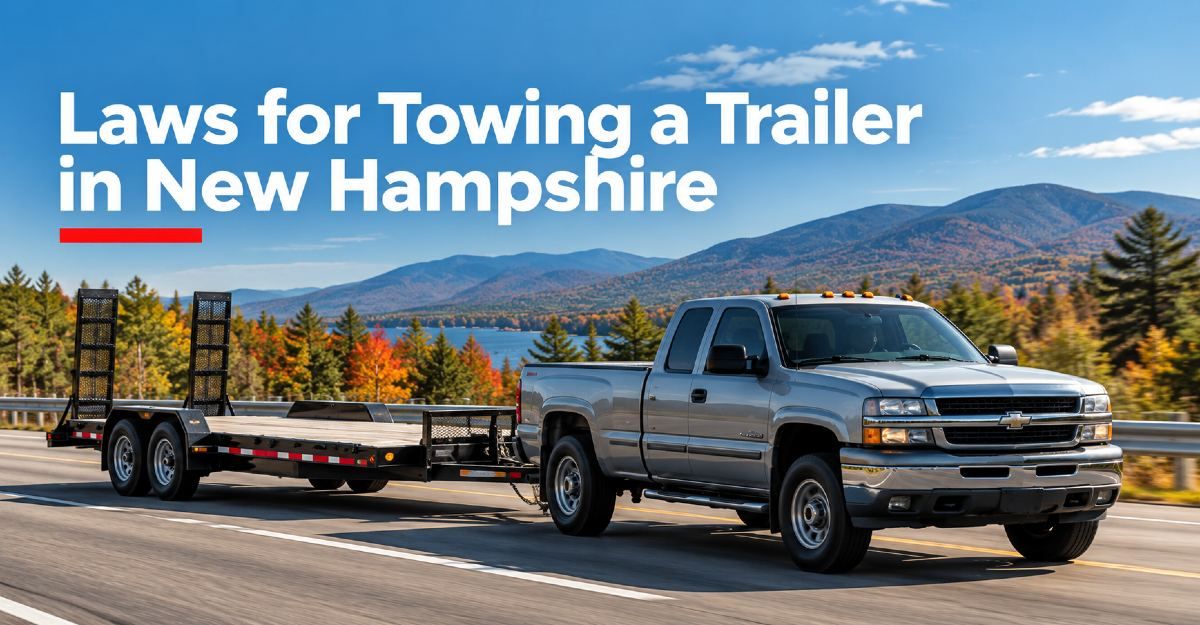
In New Hampshire, trailers up to 3,000 lbs don't require brakes if the axle weight is under 40% of the towing vehicle's rated axle weights, but house trailers over 1,500 lbs must have adequate brakes. Maximum trailer length is 48 feet, width is 102 inches, and height is 13 feet 6 inches. Passenger vehicles may tow only one trailer at a time, and it is illegal to ride or live in a trailer while it is being towed. Safety chains are mandatory, and trailers must display a copy of the towing vehicle's license plate.
Navigating the roads of New Hampshire with a trailer in tow requires a solid understanding of the state’s towing laws. Whether you’re hauling equipment in Manchester, transporting a vehicle through Nashua, or moving recreational gear around Concord, complying with New Hampshire trailer towing laws ensures safety and avoids costly fines. At Big Loads Trailer Rental Marketplace, we’re here to break down the trailer towing laws in New Hampshire so you can hit the road with confidence.
Understanding New Hampshire Trailer Towing Laws
New Hampshire has specific regulations to ensure safe towing practices across the state, from the busy streets of Manchester to the quieter routes near Concord. These laws cover everything from trailer dimensions to safety equipment, ensuring that both the driver and other road users are protected. Let’s dive into the key aspects of trailer towing laws in New Hampshire to help you stay compliant.
Trailer Dimensions and Weight Limits in New Hampshire
When towing a trailer in New Hampshire, size and weight restrictions are critical. The maximum trailer length, including bumpers, is 48 feet, while the width cannot exceed 102 inches. The height limit for a trailer and its load is 13 feet 6 inches. These dimensions apply whether you’re driving through Nashua’s industrial areas or along rural roads near Concord.
Trailers with a gross vehicle weight of 3,000 pounds or less don’t require brakes if the axle weight of the towed vehicle is under 40% of the towing vehicle’s rated axle weights. However, heavier trailers, including house trailers over 1,500 pounds, must have adequate brakes in good working order. This is especially important on highways around Manchester, where traffic can be dense, and stopping power is crucial.
Safety Equipment Requirements for Towing in New Hampshire
Safety is a top priority under New Hampshire trailer towing laws. All trailers must have safety chains or cables as a secondary connection to the tow vehicle, strong enough to handle the full load if the primary hitch fails. This rule is non-negotiable, whether you’re towing a flatbed in Nashua or a utility trailer in Concord.
Additionally, your trailer must have proper lighting to signal your actions, especially if it obscures the tow vehicle’s rear lights. The ball hitch must be mounted to the bumper or frame, and a safety chain is mandatory. These requirements ensure visibility and control, particularly on busy routes like those in Manchester, where clear communication with other drivers is essential.
Towing Restrictions and Prohibited Actions
New Hampshire has strict rules about how trailers can be towed. For instance, no vehicle can tow more than one trailer or semi-trailer at a time, except for agricultural vehicles or those authorized by the DMV. Towing a broken-down vehicle is generally prohibited unless done by a professional tow truck operator, though in emergencies, a non-professional can tow up to one mile to remove the vehicle from harm. This rule is particularly relevant in urban areas like Manchester, where roadside breakdowns are more common.
It’s also illegal to ride or live in a trailer while it’s being towed on public roads. This law applies statewide, from Nashua’s suburban neighborhoods to the scenic routes around Concord, ensuring safety for everyone on the road.
Trailer Towing Laws in New Hampshire: Speed and Mirror Regulations
Speed Limits for Towing in New Hampshire
While New Hampshire doesn’t specify a unique speed limit for towing on most roads, you must adhere to posted speed limits and drive at a safe speed. If your trailer sways or becomes uncontrollable due to speed, you can be pulled over, even if you’re within the limit. For mobile homes, the speed limit is capped at 45 mph. This is crucial on highways around Concord, where maintaining control is key to avoiding accidents.
Mirror Requirements for Safe Towing
Although New Hampshire doesn’t explicitly mandate mirror specifications, they are likely required, and you may be cited if your mirrors are inadequate. If your trailer’s width obstructs your view, consider using mirror extensions. This is especially important in cities like Nashua, where narrow roads and frequent turns demand clear visibility.
Registering and Titling Your Trailer in New Hampshire
When you purchase a trailer in New Hampshire, whether new or used, you must apply for a title immediately. If the trailer’s gross vehicle weight is 3,000 pounds or less, you’ll need an original bill of sale. If there’s no Vehicle Identification Number (VIN) listed, a VIN Verification Form (TDMV 19A) or the seller’s permanent NH registration is required. The title process can take 40–50 days, so plan ahead if you’re in Manchester or Nashua and need to use your trailer soon.
Additionally, you must affix a copy of the towing vehicle’s license plate to the trailer. If multiple vehicles might tow the trailer, ensure the correct plate is attached to match the tow vehicle. This rule helps law enforcement in cities like Concord track trailers on the road.
Why Complying with Trailer Towing Laws in New Hampshire Matters
Following trailer towing laws in New Hampshire isn’t just about avoiding fines—it’s about ensuring safety for yourself and others. Whether you’re hauling a motorcycle trailer through Manchester, a flatbed in Nashua, or a utility trailer near Concord, understanding and adhering to these regulations can prevent accidents and keep your journey smooth. At Big Loads Trailer Rental Marketplace, we’re committed to helping you find the right trailer while keeping you informed about the laws that matter.
Now that you know New Hampshire's trailer towing laws, the next step is finding the right trailer near you. BigLoads connects you directly with local trailer owners across New Hampshire, with no per-rental commission and free messaging so you can ask about weight ratings and included straps before you book. Browse trailer rentals in New Hampshire, see what’s available on the New Hampshire trailer rentals page, or if you own a trailer that sits idle, list it on BigLoads and start earning.
Towing across state lines? Check the rules for every state in our trailer towing laws by state guide.
Related on BigLoads: towing capacity calculator.
Frequently Asked Questions
What are the trailer size limits in New Hampshire?
When are brakes required on a trailer in New Hampshire?
Can I tow more than one trailer at a time in New Hampshire?
Is it legal to ride inside a trailer while it's being towed in New Hampshire?
How long does it take to get a trailer title in New Hampshire?
Ready to haul?
Find the right trailer near you — or list yours and start earning.