
How to Load a Boat on a Trailer: Ramp, Winch & Straps
Loading a boat is the one launch-ramp task that separates smooth boaters from the ones holding up the line. Between the water, the current, and an audience behind you, it pays to have a system. The good news: with the...
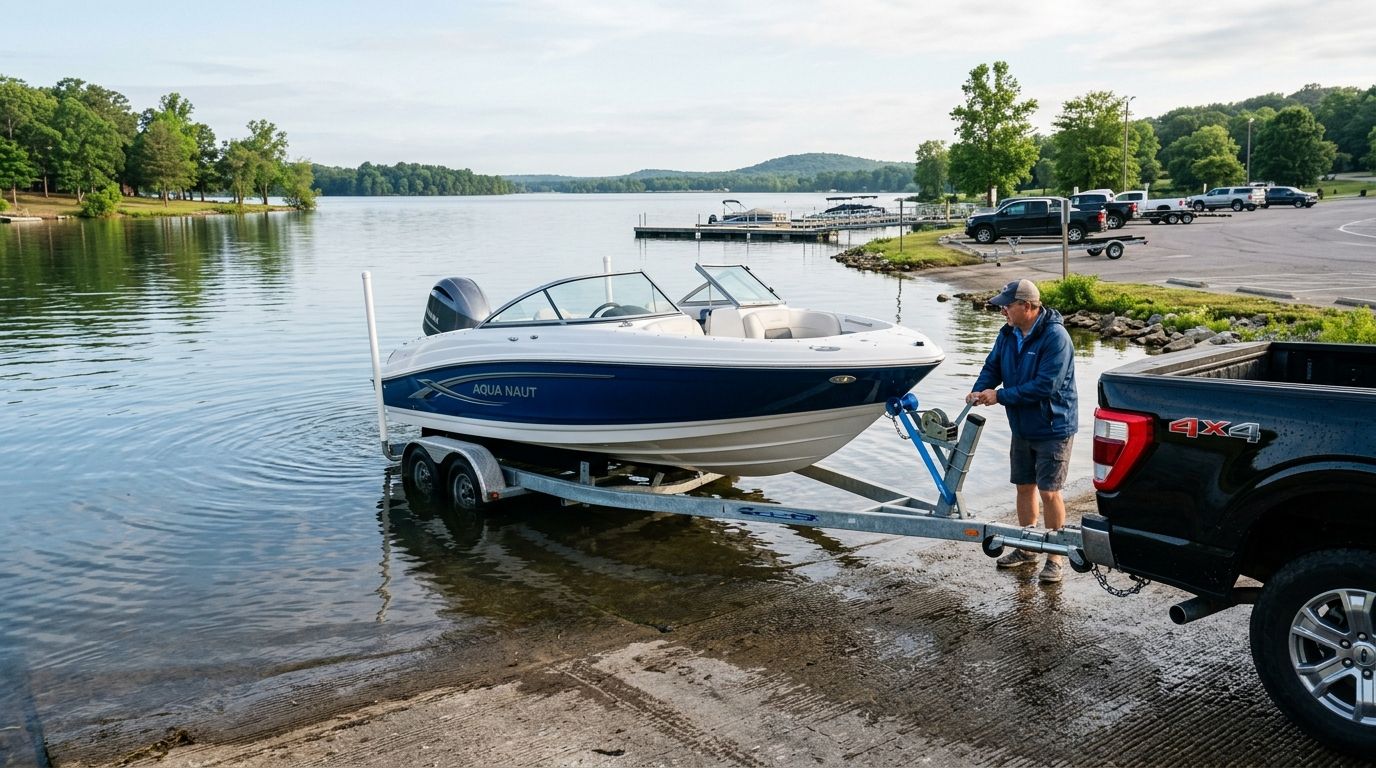
To load a boat on a trailer, back the trailer down the ramp until the bunks or rollers are mostly submerged, idle or winch the boat on until the bow contacts the bow stop, then attach the winch strap and safety chain to the bow eye. Pull up the ramp, and before driving, seat the boat on the bunks, attach the stern tie-down straps, and remove the transom saver or engine support as directed.
Loading a boat is the one launch-ramp task that separates smooth boaters from the ones holding up the line. Between the water, the current, and an audience behind you, it pays to have a system. The good news: with the right trailer depth and a steady approach, loading a boat is quick and repeatable. Here is how to load a boat on a trailer the right way.
Back the Trailer to the Right Depth
The most common mistake is trailer depth. Back down the ramp until the bunks or rollers are mostly submerged but the trailer fenders are still visible. Too shallow and the boat will not float on; too deep and the boat floats over the bunks and lands crooked.
- Bunks mostly submerged: the rear bunks under water, fenders still showing is a good starting depth.
- Set the parking brake: and chock a wheel; wet ramps are slick.
- Mind the current and wind: approach the trailer from downwind or down-current for control.
Drive On or Winch On
There are two ways to get the boat onto the trailer: power-load by idling on, or float-and-winch. Check local ramp rules; some ramps prohibit heavy power-loading because it scours the ramp. Either way, center the boat between the guide poles and bring the bow to the bow stop.
- Center on the trailer. Line the boat up between the guide poles as you approach.
- Idle on gently or winch. Bring the boat forward at low speed, or hook the winch strap and crank it up onto the bunks.
- Bow to the stop. Bring the bow eye firmly against the bow stop and roller.
- Attach the winch strap and safety chain. Hook both to the bow eye before pulling out of the water.
Secure the Boat Before You Drive
The winch strap holds the bow, but it is not a tie-down for the road. Once you pull up the ramp and out of the launch lane, seat the boat on the bunks and add stern straps so the hull cannot bounce off.
- Bow: winch strap tight plus a separate safety chain to the bow eye.
- Stern: transom tie-down straps from the trailer frame to the stern eyes or cleats.
- Engine: use a transom saver or trim the outboard per the manufacturer for towing.
- Plug and gear: pull the drain plug to let water out, and stow loose gear so nothing flies.
Want the checklist at the ramp? Download our free printable boat trailer load sheet and keep it in the tow vehicle.
Know Your Trailer and Truck Limits
Match the trailer to the boat and the truck to the load. The trailer must be rated for the boat weight plus fuel, gear, and the engine, and your tow vehicle must handle the loaded trailer. Rinse the trailer after saltwater use and check the bunks, winch strap, and lights before every trip.
When you need a trailer, you can find a boat trailer to rent near you on BigLoads. New to trailering? Read our guide to loading a trailer safely first, and check your state rules with our towing law guides.
Common Boat Loading Mistakes
Avoid the errors that hold up the ramp or lose a boat:
- Backing in too shallow or too deep so the boat lands crooked.
- Relying on the winch strap alone and skipping stern tie-downs.
- Forgetting the safety chain to the bow eye.
- Heavy power-loading where it is prohibited and scouring the ramp.
- Leaving the drain plug in or loose gear unstowed.
Related on BigLoads: dump trailer hydraulics & power in The Workshop · tie-downs & ratchet straps in The Workshop.
Frequently Asked Questions
How deep should the trailer be to load a boat?
Should you power-load or winch a boat onto a trailer?
How do you secure a boat on a trailer for towing?
Do you need stern straps if the winch strap is tight?
How do you load a boat by yourself?
Ready to haul?
Find the right trailer near you — or list yours and start earning.