
How to Tie Down a Motorcycle on a Trailer So It Never Shifts
Getting a motorcycle onto the trailer is only half the job. The other half is making sure it stays exactly where you put it - upright, balanced, and immovable - from the moment you pull out of the driveway to the moment...
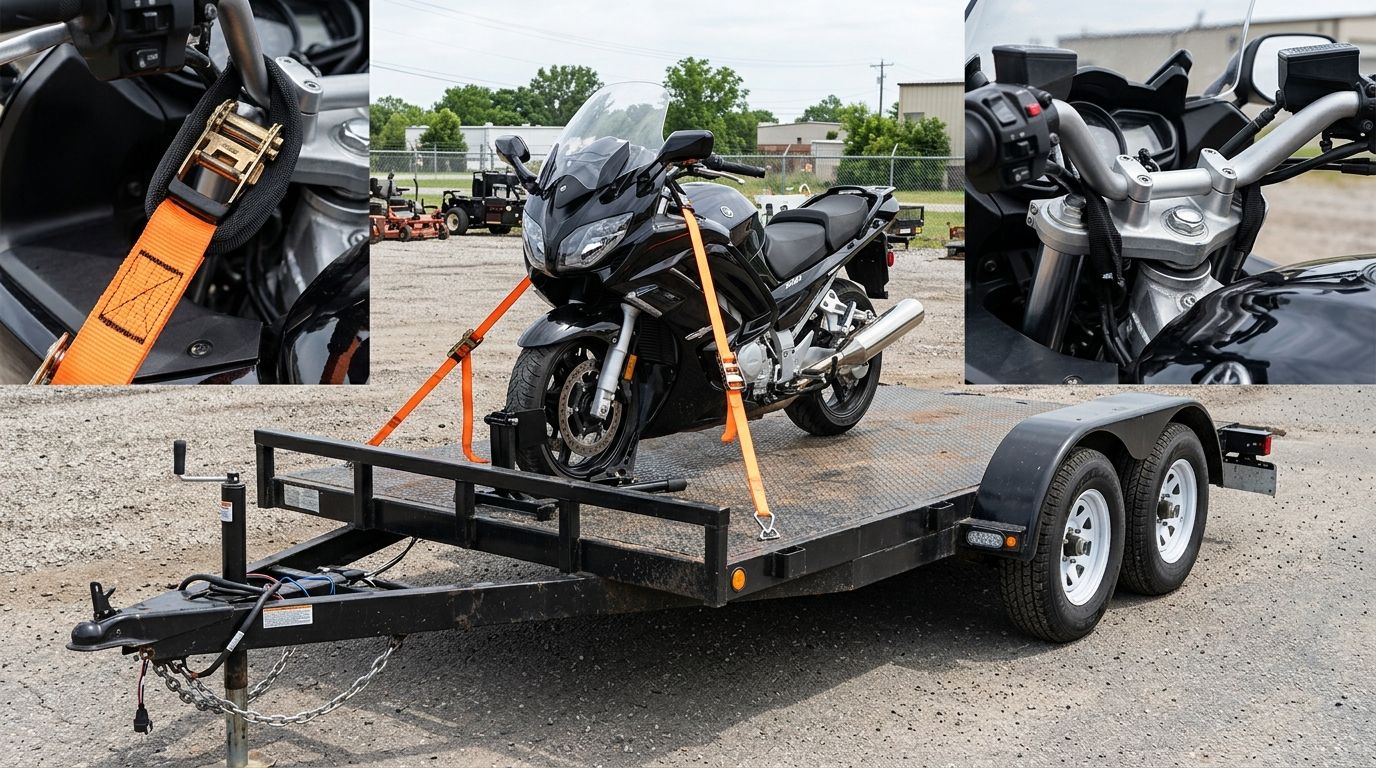
Use four 1-inch or 1.5-inch ratchet straps with soft loop anchors on the triple tree at the front (both sides) and solid frame rails at the rear (both sides). Compress the front forks 1 to 1.5 inches, snug the rear straps until the bike stands firm with no side rock, and recheck tension after the first 30 minutes of driving. Never use bungee cords, and never hook directly to forks, levers, or plastic bodywork.
Getting a motorcycle onto the trailer is only half the job. The other half is making sure it stays exactly where you put it - upright, balanced, and immovable - from the moment you pull out of the driveway to the moment you back into your destination. A motorcycle that shifts in transit can topple, slide into a fender, or damage a front fork. None of those outcomes are acceptable.
This guide covers the right way to tie down a motorcycle on a trailer: the equipment you need, where to hook the straps, how much tension is correct, and the pre-drive check that keeps things honest on long hauls.
New to renting a motorcycle trailer? Our motorcycle trailer rental guide covers costs, trailer types, and how to choose the right setup before you commit.
Equipment You Need Before You Hook a Single Strap
Improvising tie-down equipment is how motorcycles end up on the shoulder of I-10. Use the right gear and the process is straightforward.
- Ratchet straps, not bungee cords: Four 1-inch or 1.5-inch ratchet straps with at least 500 lb working load limit each. Bungee cords and rope are not substitutes for a loaded trailer.
- Wheel chock or channel track: A front wheel chock holds the bike upright while you attach straps. Many motorcycle trailers include built-in channel tracks. If the trailer you rented has neither, ask the owner before you load.
- Soft tie loop anchors: Small fabric loops you thread through the handlebar clamp area and triple-tree - gives the strap something to bite without scratching chrome or painted metal.
- Work gloves: Ratchet straps under tension can pinch hard. Protect your hands.
- Torque arm or tie-down bar for heavy bikes: A crossbar that spans both handlebars distributes load more evenly. Useful for touring bikes 700 lb and above.
Most rental trailers on BigLoads come with built-in anchor points and at least basic wheel chocks. Confirm with the owner at pickup - a three-minute conversation saves a lot of trouble on the road.
Where to Attach Straps on the Motorcycle
The biggest mistake riders make is strapping to a part of the bike that was never designed to take lateral load. Here is where to attach and where to avoid.
Attach straps here:
- Triple tree (fork clamps): The strongest point on the front of the bike for downward and lateral load. Thread a soft loop anchor through the gap between the fork tube and frame, then hook the strap to the soft loop. Never hook metal directly to painted forks.
- Frame-mounted handlebar clamps or subframe tie-down points: Some bikes have dedicated anchor loops welded onto the frame near the footpegs. These are purpose-built for this.
- Frame rails (rear): For rear straps, hook to solid frame sections, not the fender, plastic bodywork, or exhaust.
Avoid these attachment points:
- Brake levers or clutch lever (they can snap or compress the lever against the grip)
- Fender mounts (plastic flexes and cracks under sustained strap tension)
- Exhaust pipes or muffler brackets
- Throttle housing or any control cable anchor
- Rear passenger grab rail (many are decorative, not load-rated)
The Four-Point Tie-Down Method
Four straps is the standard for a solo motorcycle in a single-axle or tandem-axle trailer. Two straps forward, two straps rear.
- Set the bike in the wheel chock and put it on the sidestand, or have a second person hold it upright.
- Thread soft loops onto the triple tree on both sides.
- Run one ratchet strap from the left soft loop down to the left front anchor point on the trailer. Run the second strap from the right soft loop to the right front anchor point. Both straps should angle forward and outward at roughly 45 degrees.
- Attach rear straps to solid frame points (left and right), angling back and outward to the rear trailer anchor points.
- Begin ratcheting front straps first, alternating left-right, compressing the front suspension 1 to 1.5 inches. You want the forks slightly loaded - not fully compressed, not loose.
- Tighten rear straps until the bike is held firmly upright with no lean in either direction.
- Tug the bike firmly side to side. It should not rock. If it rocks at all, add tension.
- Secure all excess strap webbing so it cannot flap against the bike or the road during transit.
Two straps is the minimum only for a very light bike (under 400 lb) on a short haul in calm conditions. Four straps is the standard for anything heavier or any trip over an hour.
How Much Tension Is Correct
Over-tightening is a real problem. Cranking straps until the forks are fully compressed puts sustained stress on seals, spring perches, and bearings that were designed to absorb dynamic load, not static load held for hours.
The target is 1 to 1.5 inches of fork compression from the unloaded position. That is enough to keep the bike firmly planted and prevent any bounce or rock. Beyond that, you are doing more harm than good.
For bikes with air-assisted forks, check manufacturer guidance. Some air suspension systems should be at reduced pressure before tying down. After 30 minutes of highway driving, pull over and re-check tension. Straps settle. Webbing that felt firm in the driveway often loosens slightly once the trailer warms up and the bike vibrates. On trips over three hours, check tension at every major fuel stop.
Trailer Setup Matters as Much as the Straps
A perfectly strapped motorcycle on a poorly loaded trailer is still a problem. The trailer setup itself affects stability.
- Tongue weight: Position the motorcycle so roughly 10 to 15 percent of the trailer gross weight rides on the hitch ball. Too far back and the trailer sways. Too far forward and the tongue is too heavy for the receiver.
- Wheel chock position: Center the chock on the trailer width. A bike loaded off-center loads the trailer frame unevenly and can cause shimmy.
- Trailer tire condition: Check both trailer tires before loading. An underinflated trailer tire is a blowout risk that no amount of good tie-down technique fixes.
- Safety chains: Cross the safety chains under the coupler in an X pattern. If the hitch ball ever separates, the chains catch the tongue and prevent it from digging into the pavement.
For a full breakdown of trailer towing rules by state - including lighting requirements, maximum trailer widths, and braking laws - check our safe trailer towing guide.
Open vs Enclosed Trailer: Does Tie-Down Change?
The tie-down technique is the same for both open deck and enclosed trailer setups. What changes is wind exposure on an open trailer.
On an open trailer at highway speed, wind load adds a lateral force that your straps need to account for. This is especially relevant for tall motorcycles - adventure bikes, touring rigs - that present more surface area to crosswind. Run your straps tight, check tension more often, and watch the mirror for any wobble.
An enclosed trailer blocks wind entirely. The bike travels in still air, which reduces the lateral force your straps need to resist. On long cross-country hauls, enclosed trailers are worth the extra daily rental cost for the peace of mind alone.
Not sure which type to rent for your trip? See our side-by-side breakdown in Open vs Enclosed Motorcycle Trailer: Which to Rent.
Find a Motorcycle Trailer to Rent Near You
Most riders do not own a motorcycle trailer - they rent one for a rally, a track weekend, or a cross-country move. Renting from a local owner through BigLoads is faster and often cheaper than a dealership or equipment chain.
- Search for motorcycle trailers in your area on BigLoads.
- Message the owner directly - confirm what tie-down equipment is included.
- Agree on pickup time and drop-off terms.
- Inspect the trailer before you load: hitch ball, safety chains, lights, tire pressure, and anchor points.
Ready to book? Find a motorcycle trailer to rent on BigLoads and browse by location. Local owners are available across the country.
Own a Motorcycle Trailer? Put It to Work Between Your Rides
If your open deck or enclosed motorcycle trailer sits in the driveway between your own hauls, listing it on BigLoads earns you real money with minimal effort. Owners set their own rates, handle pickup coordination through the platform, and keep full control of availability.
BigLoads is free to message - renters reach out, you decide. No upfront costs, no forced availability. List your trailer and start earning.
Need a trailer for your bike? Find motorcycle trailer rentals near you.
Related on BigLoads: motorcycle trailer rentals near you · tie-downs & ratchet straps in The Workshop.
Frequently Asked Questions
How many straps do I need to tie down a motorcycle on a trailer?
Can I use bungee cords to secure a motorcycle on a trailer?
How tight should trailer straps be on a motorcycle?
Where should I attach tie-down straps on a motorcycle?
How often should I check tie-down straps on a long haul?
Ready to haul?
Find the right trailer near you — or list yours and start earning.