
Laws for Towing a Trailer in Pennsylvania: Your Complete Guide
Towing a trailer in Pennsylvania requires a thorough understanding of state-specific regulations to ensure safety and compliance. Whether you’re hauling a flatbed through Philadelphia, transporting equipment in...
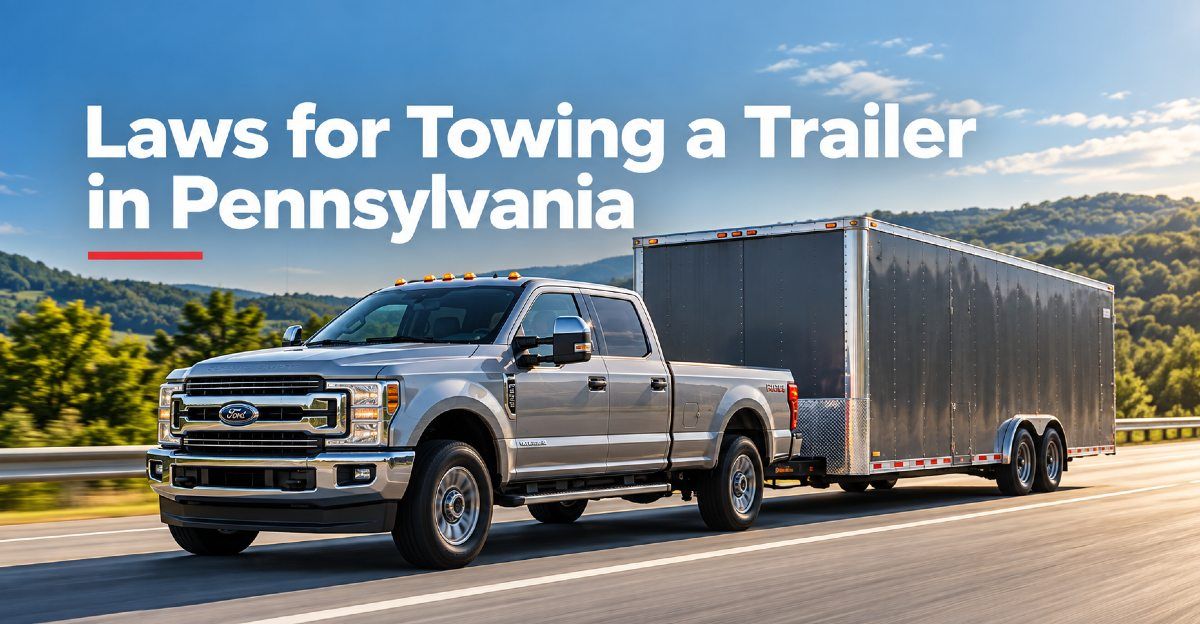
Pennsylvania trailer towing laws limit combined vehicle and trailer length to 60 feet, width to 102 inches, and height to 13 feet 6 inches. Trailers with a GVWR over 3,000 pounds must have brakes on all wheels, and those over 10,000 pounds require a breakaway braking system. All trailers must use safety chains and carry proper lighting; trailers wider than 80 inches need additional clearance and side marker lights. Registration and titling are handled through PennDOT, and a VIN inspection may be required if no VIN is present.
Towing a trailer in Pennsylvania requires a thorough understanding of state-specific regulations to ensure safety and compliance. Whether you’re hauling a flatbed through Philadelphia, transporting equipment in Pittsburgh, or moving a utility trailer around Allentown, knowing Pennsylvania trailer towing laws is essential. At Big Loads Trailer Rental Marketplace, we’ve created this comprehensive guide to help you navigate the trailer towing laws in Pennsylvania, so you can tow confidently in cities like Erie and Reading without risking fines or safety issues.
Understanding Pennsylvania Trailer Towing Laws
Pennsylvania has specific towing regulations designed to keep its roads safe, from the busy highways of Philadelphia to the quieter routes near Erie. These laws cover trailer dimensions, weight limits, safety equipment, and more. Let’s break down the trailer towing laws in Pennsylvania to ensure you’re prepared for your next haul.
Trailer Dimensions and Weight Limits in Pennsylvania
When towing in Pennsylvania, you must adhere to strict size and weight restrictions. The maximum length for a trailer, including the tow vehicle, is 60 feet. The maximum width is 102 inches (8.5 feet), and the height limit for a trailer and its load is 13 feet 6 inches. These rules apply whether you’re driving through Pittsburgh’s urban areas or Reading’s more suburban roads.
For weight, trailers with a Gross Vehicle Weight Rating (GVWR) over 3,000 pounds must have brakes on all wheels. If the trailer’s GVWR exceeds 10,000 pounds, it must also be equipped with a breakaway braking system that activates if the trailer detaches from the tow vehicle. This is particularly important on highways around Philadelphia, where heavy traffic demands reliable stopping power.
Safety Equipment Requirements for Towing in Pennsylvania
Safety equipment is a critical component of Pennsylvania trailer towing laws. All trailers must have safety chains or cables as a secondary connection to the tow vehicle, strong enough to hold the trailer if the primary hitch fails. This rule is non-negotiable, whether you’re towing a utility trailer in Allentown or a flatbed in Pittsburgh.
Trailers must also be equipped with proper lighting, including brake lights, turn signals, and reflectors. For trailers over 80 inches wide, clearance lights and side marker lights are required. If your trailer blocks the tow vehicle’s rear lights, these lighting requirements ensure visibility, especially on busy roads in Philadelphia or Erie, where clear signaling is essential for safety.
Towing Restrictions and Prohibited Actions in Pennsylvania
Pennsylvania trailer towing laws include specific restrictions to maintain road safety. For instance, passenger vehicles are generally limited to towing one trailer at a time. Towing more than one trailer is prohibited unless you’re operating an agricultural vehicle or have special authorization. This rule is strictly enforced in urban areas like Pittsburgh, where road congestion can make multiple trailers hazardous.
It’s also illegal to ride or live in a trailer while it’s being towed on public roads. This applies statewide, from the bustling streets of Philadelphia to the quieter routes in Reading, ensuring that trailers remain stable during transit. Additionally, if you’re towing a disabled vehicle, you can only do so for a short distance in an emergency, unless you’re a professional tow operator.
Trailer Towing Laws in Pennsylvania: Speed and Braking Regulations
Speed Limits for Towing in Pennsylvania
Pennsylvania doesn’t set a specific speed limit for towing, but you must follow posted speed limits and drive at a safe speed. If your trailer sways or becomes uncontrollable due to excessive speed, you can be pulled over, even if you’re within the limit. This is especially important on highways around Allentown and Erie, where maintaining control is key to avoiding accidents.
Braking Requirements for Safe Towing
Trailers over 3,000 pounds must have brakes on all wheels, and those over 10,000 pounds require a breakaway braking system. The driver should also be able to apply the trailer brakes independently of the tow vehicle’s brakes. This requirement ensures safety on busy roads in Philadelphia and Pittsburgh, where quick stops are often necessary.
Registering and Titling Your Trailer in Pennsylvania
When you purchase a trailer in Pennsylvania, you must register and title it with the Pennsylvania Department of Transportation (PennDOT). For trailers with a GVWR of 3,000 pounds or less, you’ll need a bill of sale. If there’s no Vehicle Identification Number (VIN) listed, a VIN inspection may be required. The registration process can take time, so plan ahead if you’re in Philadelphia or Pittsburgh and need to use your trailer soon.
Trailers must display a license plate, and if multiple vehicles might tow the trailer, ensure the correct plate is attached to match the tow vehicle. This rule helps law enforcement in cities like Reading track trailers on the road.
Why Complying with Trailer Towing Laws in Pennsylvania Matters
Following trailer towing laws in Pennsylvania is about more than avoiding fines—it’s about ensuring safety for yourself and others. Whether you’re hauling a flatbed through Philadelphia, a utility trailer in Pittsburgh, or a dump trailer near Allentown, understanding these regulations can prevent accidents and keep your journey smooth. At Big Loads Trailer Rental Marketplace, we’re here to help you find the right trailer while keeping you informed about the laws that matter in cities like Erie and Reading.
Now that you know Pennsylvania's trailer towing laws, the next step is finding the right trailer near you. BigLoads connects you directly with local trailer owners across Pennsylvania, with no per-rental commission and free messaging so you can ask about weight ratings and included straps before you book. Browse trailer rentals in Pennsylvania, see what’s available on the Pennsylvania trailer rentals page, or if you own a trailer that sits idle, list it on BigLoads and start earning.
Towing across state lines? Check the rules for every state in our trailer towing laws by state guide.
Related on BigLoads: towing capacity calculator.
Frequently Asked Questions
What is the maximum trailer length in Pennsylvania?
At what weight does a trailer require brakes in Pennsylvania?
How do I register a trailer in Pennsylvania?
Is it illegal to ride inside a trailer in Pennsylvania?
What safety equipment is required when towing a trailer in Pennsylvania?
Ready to haul?
Find the right trailer near you — or list yours and start earning.