
Laws for Towing a Trailer in Missouri
Quick answer: Missouri requires trailer brakes on trailers over 3,000 pounds, a 102-inch maximum width, and safety chains plus working lights on every trailer. A standard license covers most towing, with a commercial...
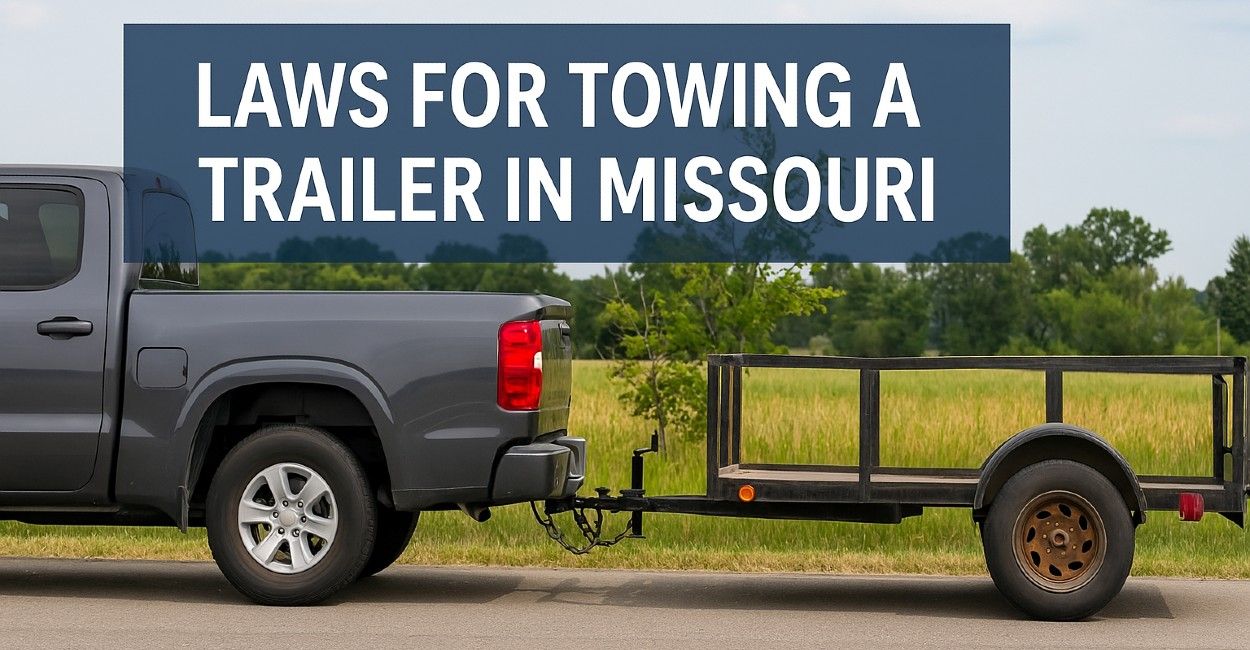
In Missouri, trailers exceeding 3,000 lbs must have their own proportional braking system, and drivers need a CDL if the combined vehicle and trailer weight exceeds 26,001 lbs. A Non-Commercial Class F license is required for combinations of 10,000 lbs or more. Trailers used for commercial purposes must be registered with the Missouri Department of Revenue. Safety chains, functioning lights, and reflectors are required on all trailers; trailers wider than 80 inches or longer than 25 feet must also display reflectors and flags.
Quick answer: Missouri requires trailer brakes on trailers over 3,000 pounds, a 102-inch maximum width, and safety chains plus working lights on every trailer. A standard license covers most towing, with a commercial license required once the combined weight exceeds 26,000 pounds. Whether you are in St. Louis, Kansas City, or Springfield, browse trailer rentals near you in Missouri from local owners.
Towing a trailer in Missouri comes with several important regulations that ensure safety and compliance with state laws. Whether you’re hauling a boat, utility trailer, or a car, understanding these laws is crucial. In this article, we’ll break down the key towing laws in Missouri, including weight limits, licensing requirements, and safety regulations, as well as provide information specific to cities like St. Louis, Kansas City, and Springfield.
Overview of Missouri Trailer Towing Laws
Missouri, like most states, has specific regulations when it comes to towing a trailer. These laws govern everything from the maximum weight a trailer can carry to the necessary equipment, including brakes and safety chains. Understanding these rules will ensure that drivers and their trailers are safe on the road and compliant with the law.
Licensing and Registration Requirements for Towing a Trailer in Missouri
In Missouri, anyone towing a trailer must have a valid driver’s license. However, there are additional requirements for those who plan to tow larger or heavier trailers.
Driver’s License Requirements
- Standard Driver's License: For most passenger vehicles towing standard trailers, a regular Class E driver’s license is sufficient.
- Commercial Driver’s License (CDL): If the total combined weight of the vehicle and trailer exceeds 26,001 lbs, the driver must have a CDL.
- Non-Commercial Class F License: For any trailer being towed with a combined weight of 10,000 lbs or more, drivers may need a Class F license.
Trailer Registration
All trailers in Missouri that are used for commercial purposes must be registered with the Missouri Department of Revenue. This includes trailers used for business purposes, whether they are rented or owned by the driver. Some personal trailers (especially small utility trailers) may not need to be registered, but it is always a good idea to check with the local DMV or Missouri Department of Revenue.
Towing Capacity and Weight Limits in Missouri
Missouri law places specific limits on how much weight you can legally tow with your vehicle.
Gross Vehicle Weight Rating (GVWR)
- GVWR for Towing: The combined weight of your vehicle and trailer cannot exceed the manufacturer's stated GVWR. This rating is crucial for determining safe towing capacity. For example, if you drive a pickup truck, the weight of the truck, your trailer, and its cargo should not exceed the truck's towing capacity.
- Weight Limits by Class of Trailer: Some trailers, like those that are commonly used for hauling heavy loads, such as flatbeds or dump trailers, may require additional permits or restrictions based on weight.
Towing Brakes and Weight Distribution
For any trailer with a weight exceeding 3,000 lbs, Missouri law requires that the trailer be equipped with its own braking system. Additionally, the brakes must be designed to work proportionally with the towing vehicle. This helps ensure that the vehicle and trailer can stop safely, preventing accidents caused by excessive weight.
Safety Regulations for Towing a Trailer in Missouri
Missouri requires that certain safety measures are followed when towing trailers. These measures include ensuring that safety chains, lights, and other towing equipment are in good working order.
Required Equipment for Towing in Missouri
- Safety Chains: All trailers must have safety chains to prevent the trailer from becoming disconnected from the towing vehicle. These chains should be cross-connected to prevent the trailer from detaching completely if the hitch fails.
- Trailer Lights: Towing vehicles are required to have functioning lights, including brake lights, turn signals, and side marker lights. The trailer must have its own set of lights, including the same as the towing vehicle (brake lights, tail lights, etc.).
- Reflectors and Flags: Trailers that are wider than 80 inches or longer than 25 feet must have reflectors and/or flags to ensure they are visible on the road.
Towing with a Vehicle vs. Towing with a Truck or RV
Towing with a standard vehicle may not be the same as towing with a large RV or a commercial truck. The towing capacity of the vehicle should always be checked to ensure safe operation. If you are towing a large or heavy load, consult the owner’s manual or a professional to make sure the vehicle is up to the task.
Towing a Trailer in Missouri Cities
Different cities in Missouri may have local regulations that supplement state laws. For example, cities like St. Louis, Kansas City, and Springfield may require additional safety measures or weight restrictions for certain areas.
Towing in St. Louis
In St. Louis, city ordinances regulate towing in areas of high traffic. Some neighborhoods may have additional restrictions to ensure trailers do not obstruct roads or cause safety hazards.
Towing in Kansas City
Kansas City, known for its large urban area, often has restrictions related to parking and trailer visibility. It's important to park trailers in designated spaces to avoid fines or towing.
Towing in Springfield
Springfield, being a smaller city, has fewer restrictions but still enforces trailer parking regulations. Drivers should ensure that their trailers are properly parked to avoid penalties.
Conclusion
Understanding Missouri’s trailer towing laws is crucial for anyone who uses a trailer regularly. By following the state’s licensing, registration, and safety regulations, drivers can ensure that they are towing their trailers legally and safely. Whether you're towing in St. Louis, Kansas City, or Springfield, being aware of both state and local laws can help prevent fines, accidents, and other issues while on the road.
Rent a Trailer in Missouri on BigLoads
Once you know Missouri’s towing rules, the last step is lining up the right trailer.
BigLoads connects you directly with local trailer owners across Missouri, with no per-rental commission and free messaging so you can ask about weight ratings and included straps before you book. Find a dump, flatbed, enclosed, and car hauler trailer near you and haul with confidence. Browse trailer rentals in Missouri, see whats available on the Missouri trailer rentals page, or if you own a trailer that sits idle, list it on BigLoads and start earning.
Towing across state lines? Check the rules for every state in our trailer towing laws by state guide.
Related on BigLoads: towing capacity calculator.
Frequently Asked Questions
What driver's license do I need to tow a trailer in Missouri?
At what weight must a trailer in Missouri have its own brakes?
Are safety chains required when towing in Missouri?
Do trailers wider than 80 inches need special markings in Missouri?
Do I need to register a trailer in Missouri?
Ready to haul?
Find the right trailer near you — or list yours and start earning.