
Car Dolly Rental Near You: Costs, Vehicle Fit & How to Load
When you need to move a car without driving it, a car dolly rental is one of the most practical options available. It costs less than renting a full enclosed car hauler, requires less equipment, and is widely available...
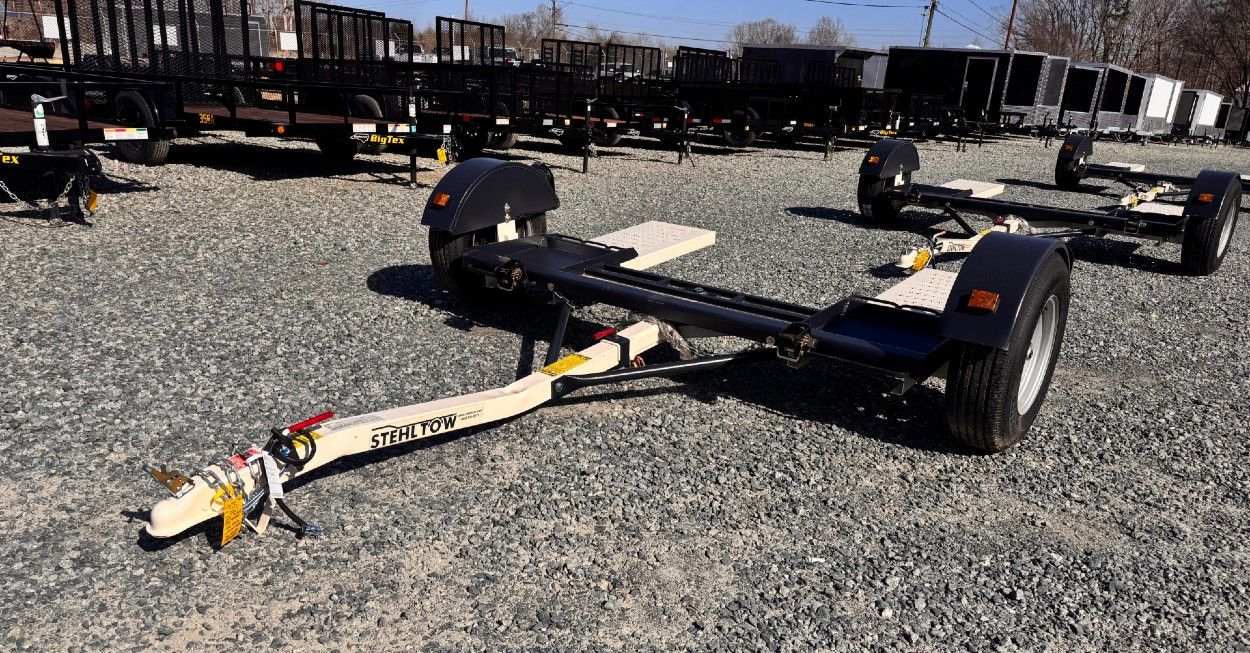
A car dolly rental typically runs $50-$120 per day from local owners or $80-$160 per day from national chains. A dolly lifts only the front two wheels off the ground, making it suitable for front-wheel-drive vehicles under 4,800 lbs. It costs less than a full car hauler trailer and requires less equipment to load — you just drive the front wheels up onto the deck.
When you need to move a car without driving it, a car dolly rental is one of the most practical options available. It costs less than renting a full enclosed car hauler, requires less equipment, and is widely available from local owners and national chains alike. This guide covers how car dollies work, what they cost, what vehicles they can handle, and how to find one near you.
What Is a Car Dolly?
A car dolly is a two-axle tow device that lifts the front wheels of a vehicle off the ground while the rear wheels roll along the pavement behind your tow vehicle. Unlike a full car hauler or flatbed trailer, a dolly only carries the front end of the car — which means setup is faster, the unit is lighter, and the rental costs less.
Because the rear wheels roll on the road, car dollies are only suitable for towing in forward direction — you cannot reverse a vehicle on a dolly. If you need to back the towed vehicle into a tight space during the move, you'll need a flatbed trailer instead.
Auto Dolly Rental Costs: What to Expect
Rental rates vary by location and whether you rent from a national chain or a local owner:
- Local owner rate (via BigLoads): $50-$120/day, depending on the dolly size and your market.
- National chain rate: $80-$160/day is typical for major rental brands.
- One-way tow rental (some chains): Flat fee based on distance — often $200-$400 for a multi-day cross-state move.
- Weekly rate: Many owners offer a discount for 5-7 day rentals; ask before booking.
Renting from a local owner through BigLoads is often cheaper than a chain, especially for shorter-duration rentals where you pick up and drop off locally.
What Vehicles Can You Tow on a Car Dolly?
Car dollies work well for front-wheel-drive vehicles — sedans, hatchbacks, and compact SUVs where the drive wheels (front) ride on the dolly deck and disengage the transmission by being off the ground. Most dollies accommodate vehicles up to about 4,800 lbs gross weight and front-axle loads up to about 2,600 lbs.
There are important limits to know before you book:
- Rear-wheel-drive vehicles: A dolly still works if you load rear-first (rear wheels on deck, front rolls). However, this limits visibility and is less common. Check with the owner before booking.
- All-wheel-drive and 4WD vehicles: In most cases, you cannot tow these on a dolly without risking drivetrain damage because all four wheels are linked. A flatbed car hauler is required.
- Manual transmission: Towing a manual-transmission vehicle on a dolly with rear wheels rolling can cause transmission wear. Check your vehicle owner's manual for towing limitations.
- Width: Verify your vehicle's track width fits within the dolly deck — most standard dollies accommodate up to about 80 inches wheel center to wheel center.
Car Dolly vs. Car Hauler Trailer: Which to Rent?
A car dolly lifts only the front wheels and is simpler to load but has limitations. A full car hauler (flatbed or enclosed) lifts all four wheels completely off the ground. Here is when each makes more sense:
- Rent a car dolly when: You have a front-wheel-drive vehicle under 4,800 lbs, you want a lower daily cost, and loading speed matters.
- Rent a car hauler when: You have an AWD, 4WD, or rear-wheel-drive vehicle; the vehicle is not running or cannot be driven up a ramp; or you want zero risk to the drivetrain.
For a full comparison of vehicle transport options, see our trailer rental cost guide.
How to Find a Car Dolly Rental Near You
The fastest way to find a local auto dolly rental is to search by zip code or city:
- Go to BigLoads and enter your location in the search.
- Filter results by trailer type — look for auto transport or car dolly listings.
- Compare daily rates, photos, and owner ratings.
- Message the owner to confirm the dolly fits your vehicle and to arrange pickup.
- Confirm coupler ball size (1-7/8" or 2") and connector type (4-pin or 7-pin) before showing up.
You can also check your state's trailer rental options through our state trailer rental hub. Local owners list their equipment directly, so you often find better rates than national chains.
What to Check Before You Rent a Car Dolly
Before you drive away, walk through a quick inspection:
- Tires on the dolly — check for flat spots or low pressure.
- Safety chains — must be crossed under the tongue and attached to solid receiver points on the tow vehicle.
- Wheel straps or cradles — verify they are intact, not frayed, and long enough to secure your vehicle's front tires.
- Coupler and ball size — a 1-7/8" coupler on a 2" ball is a towing hazard. Match them.
- Lighting connection — brake lights and turn signals must work. Test before you leave.
- Latch and lock — the dolly's coupler latch should close fully and accept the safety pin.
How to Safely Load a Car on a Dolly
Loading is the step where most problems occur. Take your time:
- Position the tow vehicle and dolly on a flat, level surface.
- Lower the wheel ramps or position the cradles for your tire width.
- Drive the front wheels of the towed vehicle slowly onto the dolly deck — have a spotter guide you.
- Center the tires in the wheel wells and engage the parking brake on the towed vehicle.
- Fasten the wheel straps or cradles tightly over each front tire.
- Attach safety chains in an X pattern under the tongue to the tow vehicle hitch.
- Test the brake lights and turn signals before pulling out.
- After 10-15 minutes of driving, stop and recheck all strap tensions — they loosen as equipment settles.
Find a Car Dolly Rental Near You
Ready to move? Browse available car dollies and auto transport trailers on BigLoads — compare local owner prices and message owners directly for availability. Most rentals are day-of or same-week.
Own a dolly or car hauler trailer that sits idle most of the year? List it on BigLoads and earn money renting it to people in your area.
Related on BigLoads: car dolly rental costs & how it works · tie-downs & ratchet straps in The Workshop.
Frequently Asked Questions
How much does it cost to rent a car dolly?
What is the difference between a car dolly and a car hauler?
Can you tow an AWD vehicle on a car dolly?
Where can I find an auto dolly rental near me?
Do you need a special license to tow a car on a dolly?
Ready to haul?
Find the right trailer near you — or list yours and start earning.