
How to Prevent Trailer Theft: 9 Ways to Protect Your Trailer
Trailer theft is one of the fastest, lowest-risk crimes out there. A thief can back up to an unattended trailer, drop the coupler on a ball, and be gone in under a minute, often in broad daylight because nobody...
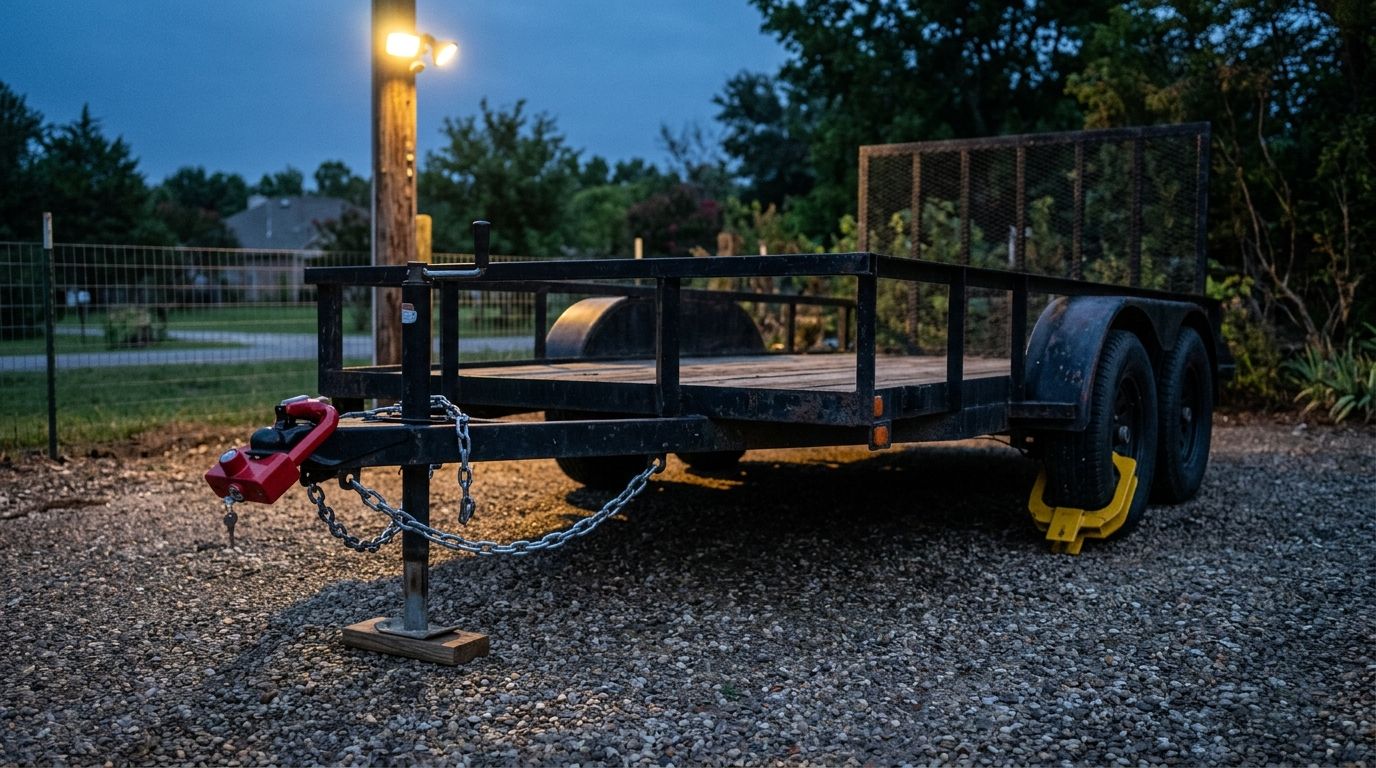
To prevent trailer theft, layer your defenses: use a coupler lock and a hitch pin lock so it cannot be hitched, add a wheel lock or boot, install a hidden cellular GPS tracker for real-time alerts and recovery, and park defensively in a well-lit spot. No single lock is enough; the combination makes your trailer the hardest target on the block.
Trailer theft is one of the fastest, lowest-risk crimes out there. A thief can back up to an unattended trailer, drop the coupler on a ball, and be gone in under a minute, often in broad daylight because nobody questions a truck towing a trailer. Utility, dump, car hauler, and enclosed trailers are all prime targets, and the gear loaded inside an enclosed trailer can be worth more than the trailer itself. The good news is that stopping most trailer theft comes down to a few cheap, layered deterrents plus a way to track it if the worst happens. Here are nine proven ways to protect your trailer.
Why Trailers Get Stolen So Often
Trailers are easy money. They hold their value, they sell fast on marketplace sites, and most sit unattended on a driveway, job site, or storage lot with nothing stopping someone from hitching up and driving away. Unlike a car, a trailer has no ignition to defeat and no built-in alarm. A thief does not need keys, tools, or skill, just a hitch and a few seconds of nerve.
That is exactly why layering works. No single lock is unbeatable, but every layer you add costs the thief more time and raises the odds they move on to an easier target. The goal is simple: make your trailer the hardest one on the block to steal.
9 Ways to Prevent Trailer Theft
Work through these from cheapest to most serious. Most owners should run at least a coupler lock, a wheel lock, and a GPS tracker as a baseline.
- Coupler lock: The cheapest high-value upgrade. A universal coupler lock covers the hitch so it cannot drop onto a ball, and the bright color is a visible deterrent in a parking lot. Expect to pay $15 to $35.
- Hitch pin lock: If your trailer is already hitched, a locking hitch pin stops someone from pulling the pin and walking off with it. A few dollars of insurance.
- Wheel lock or boot: A wheel clamp is the serious, in-your-face deterrent. It says this trailer is not moving and doubles as a chock. Great for trailers parked off-site or rented out, usually $60 to $120.
- GPS tracker: The one device that actually helps you get it back. A hidden cellular GPS tracker reports the trailer’s location in real time and alerts you the moment it moves, so you and the police can recover it. More on this below.
- Lock the kingpin (gooseneck/5th wheel): Gooseneck and fifth-wheel trailers need a kingpin lock, which blocks the coupler jaws so the trailer cannot connect to a hitch.
- Remove a wheel for long-term storage: If a trailer is going to sit for the season, pulling a wheel (or using a lug lock) makes it a non-starter for a quick grab.
- Park defensively: Back the trailer tongue against a wall, fence, or another vehicle so it cannot be hitched. Park in a well-lit spot and, when possible, block it in with a vehicle.
- Lights and cameras: Motion-activated floodlights and a visible camera deter opportunists and give you footage if something does happen.
- Record your VIN and photos: Keep the VIN, serial numbers, and clear photos on file. It speeds up a police report and insurance claim and helps prove ownership if the trailer is recovered.
Why a GPS Tracker Is the Real Game-Changer
Locks buy you time, but a GPS tracker is what gets your trailer back. Locks and boots deter the casual thief, yet a determined crew with a grinder can defeat almost any physical lock in minutes. When that happens, the only thing that matters is whether you can find the trailer. A hidden cellular GPS tracker keeps reporting its location long after the locks are cut, and the instant-movement alerts mean you often know a theft is happening before the trailer ever leaves the block.
This is also where a lot of owners get it wrong. A Bluetooth tag like an AirTag depends on someone else’s phone passing nearby to update its position, and newer tags will even warn the thief that they are being tracked. A dedicated GPS tracker runs on its own cellular connection, so it reports from anywhere with signal, not just where other phones happen to be.
For trailers, we point owners to RideDog GPS trackers, which are built specifically for this job. The hardwired Doberman wires into a 12V source and never needs charging, while the wireless Pitbull runs for months on a battery and can move between assets. Both use triple-network coverage across Verizon, AT&T, and T-Mobile and send real-time alerts for movement, towing, and tampering. BigLoads members get a bonus here too: use code BIGLOADS for $50 off RideDog’s lifetime service plans. You can compare both trackers on our trailer security gear page.
Protecting a Rental or Shared Trailer
If you rent your trailer out, security protects both your asset and your income. A trailer that is stolen while on rent is a headache for everyone, so the smart move is to build the deterrents in before it ever leaves your driveway. A permanently installed GPS tracker lets you confirm where your trailer is throughout the rental, and a coupler lock plus wheel boot gives renters a clear, easy security routine to follow when the trailer is parked.
Owners who list on BigLoads treat security as part of the service. It gives renters confidence, cuts down on disputes, and keeps a valuable asset earning instead of sitting in a police report. If you are thinking about putting an idle trailer to work, you can list your trailer for rent and build these protections in from day one.
Build Your Trailer Security Setup
You do not need to spend a fortune to make your trailer a hard target. Start with the three layers that stop the most theft and add from there:
- Deter: a coupler lock and a wheel boot so a thief cannot hitch up or roll it away.
- Detect: motion lights and a visible camera so attempts get noticed.
- Recover: a hidden GPS tracker so you can find and recover the trailer if it is taken.
Pull the gear together on our security and protection collection, and if you are in the market for a trailer in the first place, you can find a trailer to rent near you on BigLoads.
Related on BigLoads: best trailer rental insurance 2026 · trailer rental insurance.
Frequently Asked Questions
What is the best way to prevent trailer theft?
Do GPS trackers actually help recover stolen trailers?
Is an AirTag good enough to protect a trailer?
How much does trailer security gear cost?
How do I protect a trailer I rent out?
Ready to haul?
Find the right trailer near you — or list yours and start earning.